
The Orange Aisle Is More Complicated Than You Think
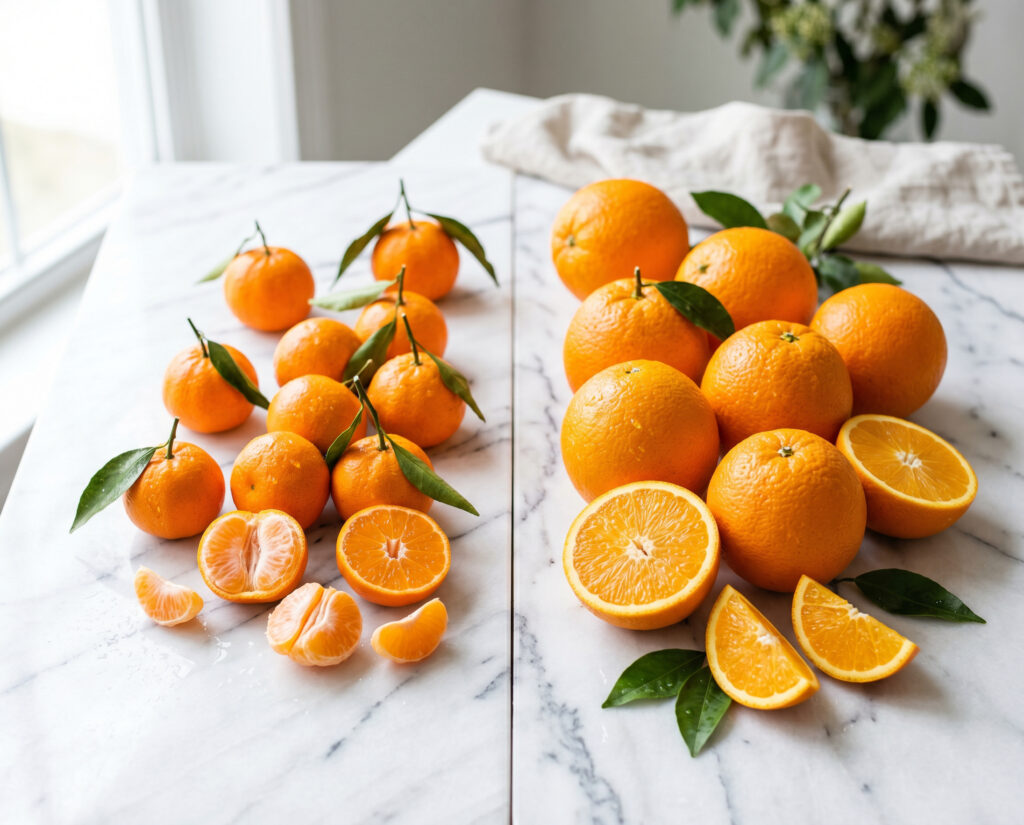
Walk into any supermarket and the citrus section looks simple — a pile of large oranges, a smaller pile of mandarins, and a price difference that makes you wonder whether the smaller ones are just a more expensive version of the same thing.
They’re not. And that’s the whole point of this article.
The mandarin orange vs orange debate is one of the most genuinely interesting comparisons in nutrition — because despite looking similar and belonging to the same citrus family, these two fruits are actually different species with different nutritional profiles, different flavour compounds, and different best uses. One is not simply a miniature version of the other.
So let’s settle it properly. Here’s everything you need to know about the difference between mandarin and orange — from taste and texture to vitamins, calories, and which one you should actually be reaching for.
🍊 Did you know? Mandarins and oranges are not the same species. Mandarins are Citrus reticulata while oranges are Citrus sinensis — and oranges are actually believed to be a hybrid of a mandarin and a pomelo, making the mandarin the older of the two.
What Is the Actual Difference Between Mandarin and Orange?
Before we compare nutrition, let’s clear up the basics. Here’s how these two fruits differ at a glance:
| Feature | 🍊 Mandarin Orange | Orange |
|---|---|---|
| Species | Citrus reticulata Older species | Citrus sinensis |
| Size | Small, flattened shape | Larger, round Bigger portions |
| Skin | Thin, loose, easy to peel Easier | Thick, tighter rind |
| Taste | Sweeter, less acidic Sweeter | Tangy, slightly tart |
| Seeds | Fewer seeds | More seeds |
| Origin | Ancient China, 3000+ years Older history | Hybrid of mandarin + pomelo |
| Best for | Snacking, kids, gifting | Juicing, cooking More versatile |
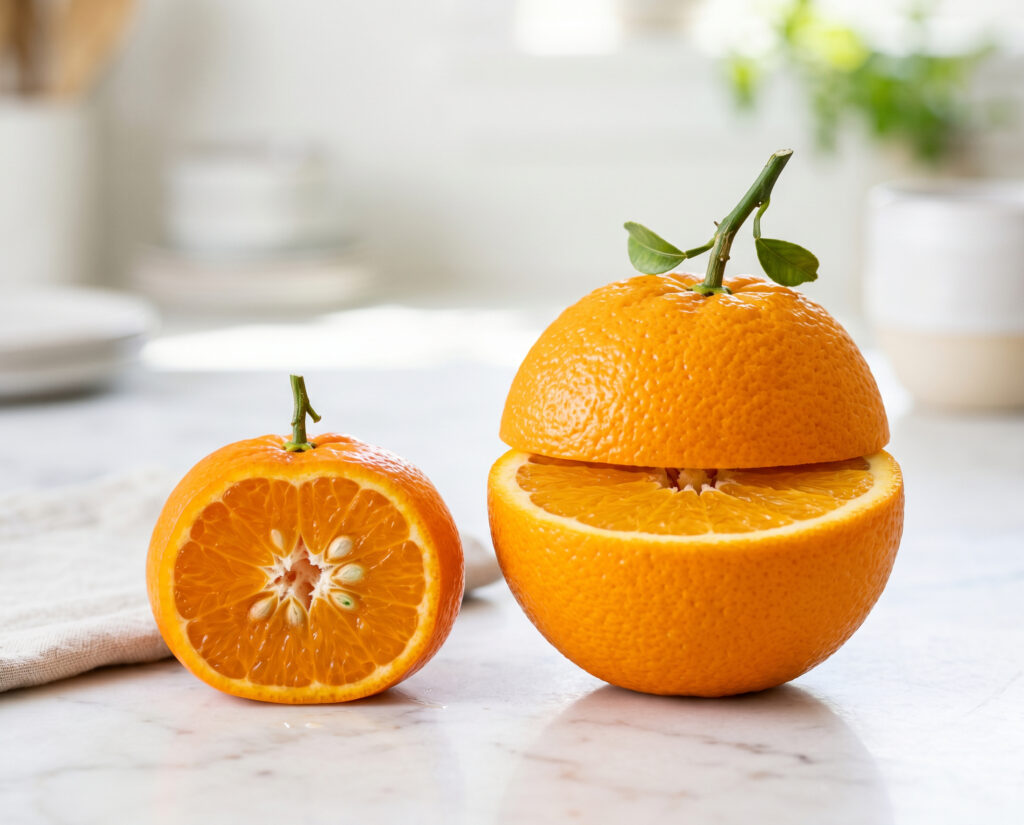
Left: Mandarin orange. Right: Regular navel orange. The size difference tells only half the story. Shop both at Profruits.in →
Mandarin Orange Nutrition vs Orange: The Numbers Side by Side
Here is where it gets genuinely interesting. Both fruits are healthy — but they win in different areas. This is the full mandarin orange nutrition comparison per 100g against a regular orange:
| Nutrient (per 100g) | 🍊 Mandarin Orange | Regular Orange |
|---|---|---|
| Calories | 53 kcal | 47 kcal Lower |
| Vitamin C | 26.7 mg | 53.2 mg 2× Higher |
| Vitamin A | Higher Wins | Lower |
| Beta-Cryptoxanthin | Rich source Unique | Minimal |
| Vitamin E | Higher Wins | Lower |
| Vitamin B3 (Niacin) | Higher Wins | Lower |
| Fibre | ~1.8 g | ~2.4 g Slightly more |
| Potassium | 324 mg | 326 mg Similar |
| Iron | Higher Wins | Lower |
| Magnesium | Higher Wins | Lower |
| Natural Sweetness | Higher Wins | Lower, more tart |
📚 Source: USDA FoodData Central — the global gold standard for nutritional data.
💡 The key takeaway from the numbers: Oranges have roughly double the Vitamin C of mandarins — that’s a clear win. But mandarins beat oranges on Vitamin A, Vitamin E, iron, magnesium, and a unique compound called beta-cryptoxanthin that regular oranges barely contain. Neither fruit is the outright winner — they’re strong in different areas.
The Head-to-Head Scorecard
Let’s make this visual. Here’s how mandarin orange and regular orange compare across the categories that matter most to everyday health:
🍊 Mandarin Orange vs Orange — Round by Round
Where Mandarin Oranges Win: The Unique Benefits
So what specifically makes mandarin orange benefits stand out from what a regular orange offers? Here are the areas where mandarins genuinely pull ahead:
1. Beta-Cryptoxanthin — The Compound Oranges Don’t Have
This is the big one. Mandarins are one of the richest dietary sources of beta-cryptoxanthin — a carotenoid that your body converts into Vitamin A as needed. Research has linked high beta-cryptoxanthin intake to a reduced risk of lung cancer, improved bone health, and lower inflammation. Regular oranges contain very little of this compound. If you’re eating citrus purely for the antioxidant diversity, mandarins offer something oranges simply can’t match.
2. Easier on the Stomach
Mandarins are significantly less acidic than regular oranges. For anyone who suffers from acid reflux, heartburn, or a sensitive stomach — and a large proportion of Indians do — mandarins are the far more comfortable daily citrus choice. You get the vitamin hit without the digestive discomfort that large, tart oranges can cause.
3. Natural Portion Control
One medium mandarin is approximately 88 grams and around 47 calories. That’s a complete, self-contained snack you can eat in two minutes with no knife, no mess, and no half-eaten fruit sitting in the fridge. Regular oranges are larger and harder to portion — meaning people either eat more than they need or leave half for later. For calorie-conscious eating, mandarins win on convenience alone.
4. Better for Kids and Daily Snacking
The thin, loose skin of a mandarin means even children can peel one independently. They’re sweet, low-mess, and come in a natural single-serving size that makes them the ideal school snack or mid-afternoon fruit. Regular oranges require more effort and often need to be cut — making mandarins the more practical daily choice for families.
Mandarin Orange Wins For:
Vitamin A, beta-cryptoxanthin, iron, magnesium, sweetness, snackability, kids, acid sensitivity, portion control, and unique antioxidant compounds not found in regular oranges.
Where Regular Oranges Win: Don’t Count Them Out
In the interest of being completely honest — regular oranges aren’t losing this comparison. Here’s where they genuinely come out ahead:
1. Vitamin C — It’s Not Even Close
If your primary goal is Vitamin C — for immunity, collagen, or fighting seasonal illness — a regular orange delivers roughly double the Vitamin C of a mandarin per 100g. A single medium orange gives you almost your full daily Vitamin C requirement. If you’re coming down with a cold or heading into monsoon season in India, a regular orange is your better bet for that specific nutrient.
2. More Fibre Per Serving
Oranges contain slightly more dietary fibre than mandarins per 100g — which matters if you’re eating citrus specifically for gut health or to manage blood sugar. The difference is modest, but consistent.
3. Better for Juicing and Cooking
Regular oranges yield significantly more juice per fruit and have a stronger, more defined citrus flavour that holds up well in cooking, marinades, salad dressings, and desserts. Mandarin juice is sweeter and less acidic — delicious, but not always what a recipe calls for.
Regular Orange Wins For:
Vitamin C content, dietary fibre, juicing, cooking versatility, and anyone specifically targeting immunity through maximum Vitamin C intake.
Is Mandarin Orange Good for Health? The Verdict
Absolutely — and is mandarin orange good for health is one of the most searched questions about this fruit, so let’s be direct about it.
Mandarin oranges are genuinely excellent for health across multiple dimensions. They support immunity through Vitamin C and Vitamin A working together. They protect eye health through beta-cryptoxanthin and lutein. They support skin through collagen-boosting Vitamin C and anti-inflammatory antioxidants. And their low calorie count, manageable portion size, and natural sweetness make them one of the easiest healthy snacks to maintain as a daily habit.
The only scenario where a regular orange is clearly the better choice is if you’re specifically trying to maximise your Vitamin C intake from a single fruit. For everything else — daily snacking, kids’ nutrition, digestive comfort, antioxidant variety, and gifting — mandarins are the smarter, more practical, and arguably more enjoyable fruit.
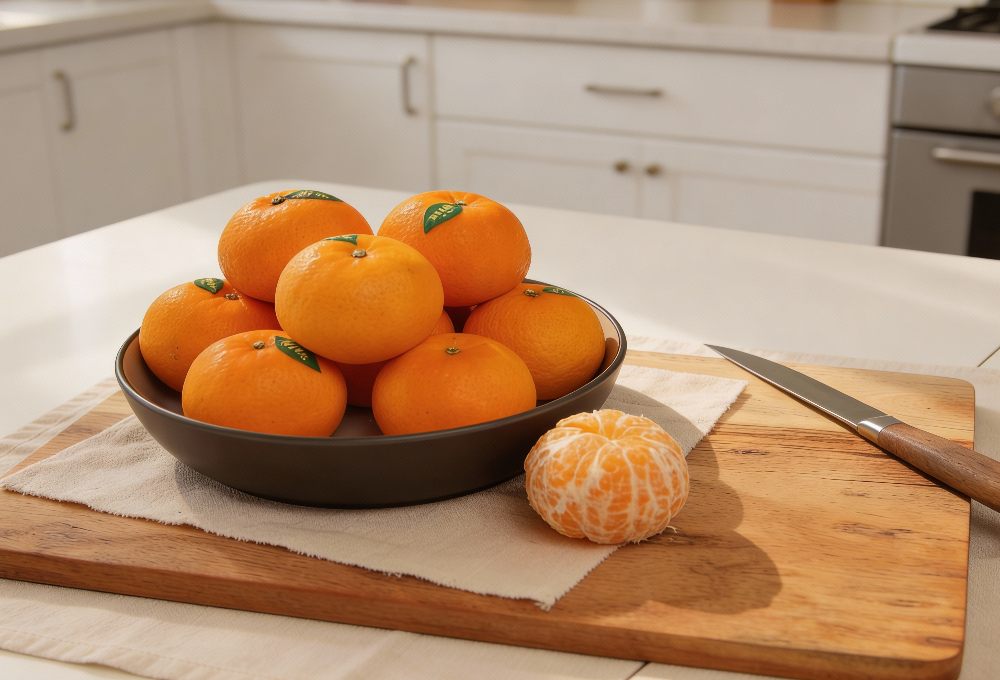
Fresh mandarin oranges — sweeter, easier to eat, and packed with unique antioxidants. Order from Profruits.in →
So Which One Should You Actually Buy?
🛒 Simple Guide: When to Choose Each
-
🍊
Choose Mandarin Orange when: you want a daily snack, packing for kids, buying a gift, have acid sensitivity, want more Vitamin A and unique antioxidants, or simply want something sweeter and easier to eat.
-
🍋
Choose Regular Orange when: you want maximum Vitamin C, making juice, cooking a recipe that needs citrus, or specifically targeting immunity during flu season.
-
✅
Best answer: Eat both. They complement each other nutritionally. Mandarins for daily snacking, oranges for juicing and Vitamin C bursts.
-
🎁
For gifting: Mandarins win every time — they’re visually stunning, culturally significant, sweet, and arrive in a natural self-contained package that doesn’t bruise easily.
Frequently Asked Questions
The Bottom Line
The mandarin orange vs orange debate doesn’t have a single winner — and that’s actually the most useful answer. These are two genuinely different fruits that shine in different contexts.
If you want maximum Vitamin C from a single fruit, a regular orange is your best bet. But if you’re looking for a daily snack that’s sweeter, easier to eat, gentler on your stomach, richer in Vitamin A and unique antioxidants like beta-cryptoxanthin, and more practical for kids and gifting — mandarin oranges win comfortably.
The smartest approach is to keep both in your fruit bowl and use them for what they do best. And the easiest way to get premium versions of both delivered fresh to your door? Profruits.in.

Hi, I’m Tanish Hingorani, a Business student with a passion for food, flavour, and everything that makes eating an experience worth talking about. As a baker, I bring a hands-on understanding of ingredients, quality, and the art of turning something simple into something extraordinary — which is exactly what drives my love for exotic and premium fruits. Through my blogs on ProFruits, I share honest insights, practical guides, and fresh perspectives on how the right fruits can transform your health, your kitchen, and your gifting game. Whether I’m breaking down the best seasonal picks in Mumbai or exploring the world of imported exotics, my goal is to make every read genuinely useful and every order feel like the right one.