
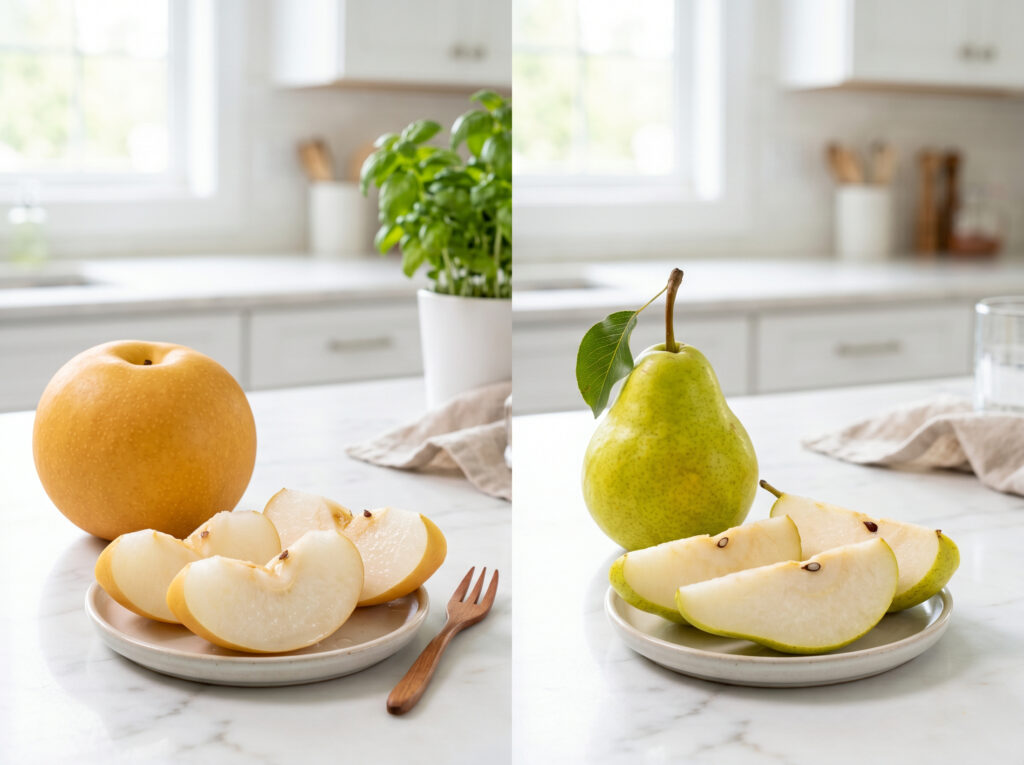
Korean pear vs regular pear — if you’ve ever picked one up at a fruit store and wondered whether it’s worth the premium price, you’re not alone. At first glance, it looks like a bigger, rounder pear. But the difference between Korean pear and a regular pear goes far deeper than size — the taste, texture, nutritional profile, and even the way you eat them are completely different.
This guide covers everything you need to know: what Korean pear actually tastes like, how the texture compares to a regular European or Indian pear, which has better nutritional value, and whether it’s worth the higher price for everyday buyers in India.
Quick context: What most people call a “Korean pear” is a variety of Asian pear (Pyrus pyrifolia) grown in South Korea. It is also sometimes called nashi pear or apple pear. A “regular pear” in the Indian context usually refers to either the European/Western pear (Pyrus communis) — like a Bartlett or Conference — or local Indian varieties. They are different species with very different eating experiences. ProFruits sources Korean pear directly from South Korea, delivered next-day in Mumbai.
Korean Pear vs Regular Pear: At a Glance
Before getting into taste and nutrition, it helps to understand what you’re looking at. Korean pear and regular pear are visually quite distinct once you know what to look for.
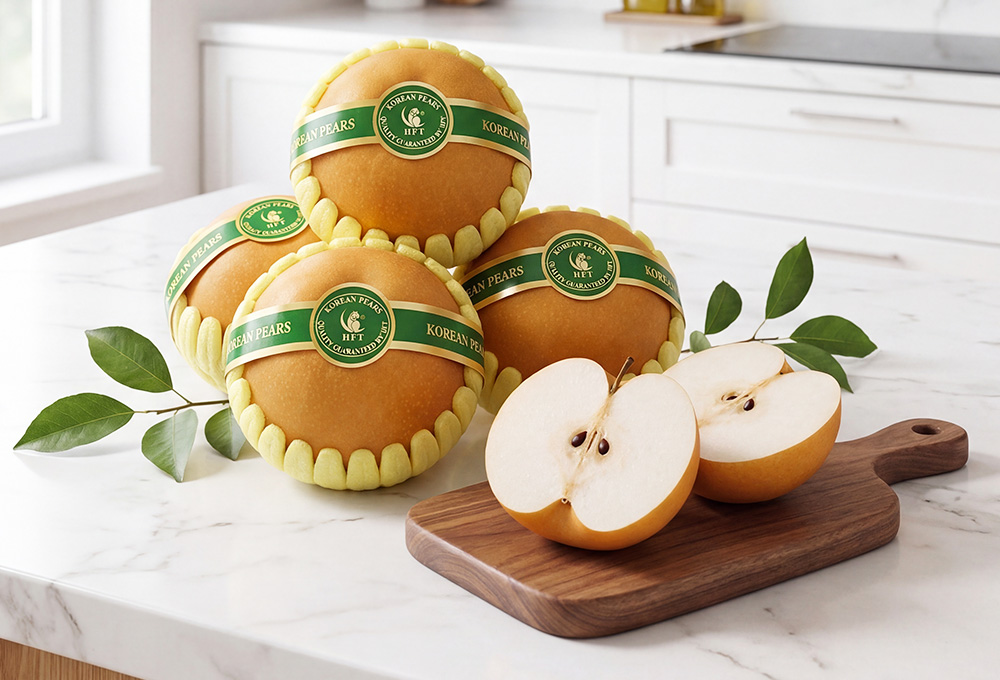
Korean Pear
🇰🇷 South Korea · Pyrus pyrifolia
- Large, round, apple-like shape
- Golden-yellow to russet-brown skin
- Crisp and juicy, never soft
- Very high water content
- Honey-sweet fragrance when ripe
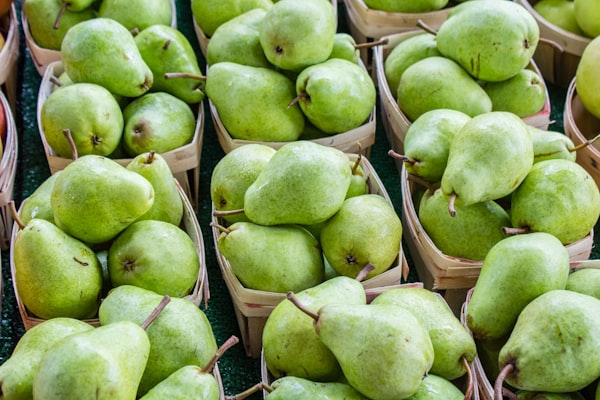
Regular Pear
🇪🇺 Europe / India · Pyrus communis
- Classic elongated bell shape
- Green, yellow, or red skin
- Soft and buttery when ripe
- Gritty or grainy texture
- Subtle, mild fragrance
Key fact: Korean pear is more closely related to apple than it is to European pear in terms of texture. The “crisp-and-juicy” eating experience is why it is also called “apple pear” in some markets.
Korean Pear Taste: How Does It Compare?
Korean pear taste is one of the first things that surprises people trying it for the first time. If you expect a regular pear flavour, you will be pleasantly wrong.
Korean pear flavour profile
Korean pear has a clean, intensely sweet flavour with very clear honey and floral notes. The sweetness is upfront and direct — not subtle. There is almost no tartness, which is quite different from most Western pears that have a balance of sweet and acidic. The high water content means each bite delivers a burst of sweet juice rather than dense, starchy flesh. Think of it as the most refreshing pear you have ever eaten.
Regular pear flavour profile
European and Indian regular pears have a more complex, nuanced flavour — sweet with definite tartness, occasionally with spicy or floral undertones depending on the variety. The flavour is more muted and develops through the soft, buttery flesh rather than through juice. A ripe Conference pear, for example, has a rich almost wine-like depth that a Korean pear does not attempt.
Side-by-side taste comparison
| Flavour Aspect | Korean Pear | Regular Pear |
|---|---|---|
| Sweetness | Very high, direct honey sweetness | Moderate, develops with ripeness |
| Tartness | Very low to none | Low to moderate |
| Juiciness | Exceptionally high, bursts on bite | Moderate; varies by variety |
| Floral / Honey Notes | Pronounced, especially near skin | Subtle or absent |
| Complexity | Clean, simple, refreshing | More layered, wine-like in good varieties |
| Aftertaste | Clean finish, no lingering | Can be slightly astringent |
Who prefers which? If you enjoy eating fruit as a refreshing snack — particularly in hot Mumbai weather — Korean pear wins easily on juiciness and sweetness. If you prefer fruit with more flavour complexity for cheese boards or cooking, a high-quality European pear has more depth.
Texture: The Biggest Difference Between Korean Pear and Normal Pear
This is where the difference between Korean pear and normal pear is most dramatic. Texture is genuinely the defining characteristic — and the one that most surprises Indian buyers trying Korean pear for the first time.
Korean pear texture
Korean pear is always crisp. It does not soften the way a European pear does as it ripens — it stays firm and crunchy throughout its life. The flesh has a clean, snappy bite similar to a very juicy apple, with a finer, smoother cell structure than most pears. There is no grittiness. No mushiness. You either eat it crisp or you have waited too long.
Regular pear texture
European and Indian pears are soft when ripe. This is the expected — and desired — eating experience. The flesh goes from firm and slightly gritty when unripe, to buttery, yielding, and smooth when fully ripe. A perfectly ripe European pear melts in your mouth. Many people find this preferable for desserts, poaching, and eating in slices.
Unmatched crunch and water content. Holds its texture for 2–3 weeks refrigerated without turning mealy.
Preferred for cooking, poaching, and eating in desserts. The soft melt is irreplaceable.
Important note for first-time buyers: Do not wait for Korean pear to soften before eating it. It will not. If it feels soft all over, it has gone past peak quality. Always eat Korean pear while it is still crisp — that is the intended experience.
Korean Pear Nutrition vs Regular Pear: Which Is Healthier?
When it comes to nutrition, both pears are healthy choices — but they differ meaningfully in a few key areas. Here is a per 100g comparison based on standard nutritional data from USDA FoodData Central
| Nutrient (per 100g) | Korean / Asian Pear | European / Regular Pear |
|---|---|---|
| Calories | 42 kcal | 57 kcal |
| Carbohydrates | 10.6g | 15.2g |
| Natural Sugars | 7.1g | 9.8g |
| Dietary Fibre | 3.6g | 3.1g |
| Vitamin C | 4.5 mg (5% DV) | 4.3 mg (5% DV) |
| Potassium | 121 mg | 116 mg |
| Water Content | ~88% | ~84% |
| Folate | 8 mcg | 7 mcg |
| Copper | 0.14 mg | 0.08 mg |
What does this mean in practice?
- Lower calories: Korean pear has notably fewer calories per 100g than European pear, making it a better choice if you are managing calorie intake while still wanting a sweet, satisfying fruit.
- Higher water content: At roughly 88% water, Korean pear is one of the most hydrating fruits available — genuinely useful in Mumbai’s climate.
- Good fibre: The fibre content in Korean pear is slightly higher than European pear, supporting digestion and satiety.
- Natural sugars are lower: Despite tasting very sweet, Korean pear has less sugar per 100g than a European pear — the sweetness perception is amplified by the high water content and clean flavour delivery.
Is Korean Pear Good for Health? The Benefits Explained
Is Korean pear good for health? The short answer is yes — it is one of the more nutritionally beneficial exotic fruits you can add to your diet, with several properties that make it stand out beyond basic fruit nutrition.
1. Digestion support
Korean pear contains both soluble and insoluble fibre. The insoluble fibre adds bulk and supports regular bowel movements. Korean pear also contains sorbitol, a natural sugar alcohol that acts as a mild laxative, which is part of why it has a traditional reputation in Korean culture for aiding digestion after a heavy meal.
2. Anti-inflammatory properties
Korean pear contains chlorogenic acid and other polyphenol antioxidants that have demonstrated anti-inflammatory properties in research. These compounds help neutralise free radicals and may reduce low-grade inflammation associated with metabolic conditions.
3. Hydration
At 88% water, eating one Korean pear contributes meaningfully to daily fluid intake. This is particularly relevant in India where heat and humidity increase hydration requirements throughout the year.
4. Liver support (traditional use)
In Korean traditional medicine, Korean pear has long been used to support liver function and as a hangover remedy. Modern research has found some basis for this — compounds in Korean pear appear to accelerate alcohol metabolism, particularly the breakdown of acetaldehyde, the compound responsible for hangover symptoms.
5. Respiratory health
Korean pear is a traditional remedy for coughs and sore throats in Korea and China. It is commonly prepared as a steamed pear with honey and ginger. While the evidence is mostly traditional, Korean pear’s high moisture content and anti-inflammatory compounds do support its use as a soothing food during respiratory illness.
Summary: Korean pear supports digestion, hydration, and contains useful antioxidants — all with fewer calories than a regular pear. It is particularly well-suited for health-conscious buyers who want a fruit that is sweet and satisfying without a high sugar or calorie load.
Why Is Korean Pear So Expensive in India?
This is one of the most common questions we receive at ProFruits, and it deserves a direct answer. Why is Korean pear so expensive compared to local pears or even other imported fruits?
1. The fruit is grown and harvested with exceptional care
Premium Korean pears — particularly the varieties exported from South Korea — are grown with individual paper bagging on each fruit while still on the tree. This protects the skin, prevents blemishes, and allows the fruit to develop its characteristic golden colour without exposure to direct sunlight. Each pear is hand-selected and individually inspected before export. This level of agricultural precision has no equivalent in commodity fruit farming.
2. Cold-chain logistics from South Korea to Mumbai
Korean pear must be maintained in a continuous cold chain from the orchard in South Korea to your doorstep in Mumbai. This means refrigerated storage, refrigerated air freight, customs clearance without temperature breaks, and last-mile cold delivery. Every link in this chain costs significantly more than ambient transport for local fruit.
3. Short seasonal window and limited availability
Korean pear has a specific harvest season, and the premium export-quality fruit is limited in volume. High demand from markets in China, Japan, the USA, and increasingly India drives prices up for the best quality fruit.
4. Size and weight
A single Korean pear typically weighs 500g to 800g — far larger than a regular pear. The price per piece may seem high, but the per-kilogram cost is often more competitive than it appears.
ProFruits perspective: Korean pear is an investment in a genuinely different eating experience. The combination of extreme juiciness, low calories, and shelf life of 2–3 weeks refrigerated makes it one of the best value-per-eating-occasion exotic fruits we carry. A single Korean pear can be sliced and shared across a family as a premium fruit experience for the cost of a speciality coffee.
How to Use Korean Pear vs Regular Pear in the Kitchen
The texture difference between the two pears means they are used very differently in cooking and eating.
Best uses for Korean pear
- Eaten fresh as a snack: The definitive use. Slice or quarter, no peeling needed. The crisp texture and intense juiciness are best appreciated raw and cold.
- Fruit platters and gifts: The large size, beautiful golden skin, and premium feel make Korean pear ideal for fruit gifting and platters.
- Meat marinades: Korean cuisine uses grated or blended Korean pear as a meat tenderiser. The natural enzymes (particularly proteases) break down tough muscle fibres, resulting in exceptionally tender grilled meat. This is a legitimate culinary technique, not just tradition.
- Salads and salsas: The crisp texture holds up well in salads and does not release excessive liquid. Pairs well with blue cheese, walnuts, and rocket leaves.
- Juices and smoothies: Extremely high juice yield — one Korean pear produces a substantial glass of juice with almost no effort.
Best uses for regular pear
- Poaching: European pears poach beautifully, holding their shape while becoming silky and absorbing flavours from wine, spices, and syrup.
- Baking: Tarts, crumbles, cakes — the soft flesh integrates into baked goods in a way Korean pear cannot (it stays too firm).
- Cheese boards: The flavour complexity and soft texture complement strong cheeses well.
- Jams and preserves: Regular pear breaks down beautifully when cooked, making it ideal for jams.
How to Tell If Your Korean Pear Is Ripe
This is covered in detail in our exotic fruit ripeness guide, but since Korean pear behaves so differently from regular pear, it’s worth highlighting the key rules here.
Critical rule: Korean pear does NOT soften when it ripens, unlike European pear. Do not wait for it to become soft — it will not. A soft Korean pear is overripe. Ripeness is indicated by colour and fragrance, not firmness.
- Colour: Look for golden-yellow to warm russet-brown skin. Pale greenish-yellow means it needs more time.
- Fragrance: A ripe Korean pear has a distinct, intensely sweet honey fragrance, especially near the base. This is the single most reliable ripeness indicator.
- Skin texture: Should feel smooth and slightly waxy. The russet (rough) patches are completely normal and desirable — they indicate varietal quality.
- Shelf life: Korean pear has exceptional shelf life — 2–3 weeks refrigerated at peak quality. ProFruits delivers Korean pear ready to eat.
- Avoid: Any with large dark brown patches, sunken areas, or a mealy feel when pressed.
Try Korean Pear for Yourself
ProFruits sources premium Korean pears directly from South Korea — cold-chain delivered to Mumbai, next day. Browse our full exotic fruit range including mangosteen, rambutan, dragon fruit, and more.
🍊 Browse All Exotic FruitsThe Verdict: Korean Pear vs Regular Pear
Korean pear and regular pear are genuinely different fruits that serve different purposes — comparing them as better or worse misses the point. Here is the honest summary:
Choose Korean pear if you want an exceptionally juicy, crisp, sweet eating experience with lower calories, high hydration, and a long fridge life. It is the better snacking fruit, the better choice for hot weather eating, and the better fruit for raw preparations and meat marinades.
Choose regular pear if you want soft, buttery texture for eating fresh out of hand in that traditional way, or if you are cooking — baking, poaching, or making preserves where European pear’s texture and flavour complexity are irreplaceable.
If you have never tried Korean pear, the best next step is simply to order one. The difference between Korean pear and normal pear is not something that can be fully conveyed in words — the first bite will do the job better than any comparison table.
Frequently Asked Questions
What does Korean pear taste like compared to a regular pear?
Korean pear tastes noticeably sweeter and more intensely flavoured than a regular European pear, with clear honey and floral notes. It is also far juicier — the high water content (around 88%) gives it a clean, refreshing quality that regular pear does not have. Regular pear tends to have more flavour complexity but less immediate sweetness and juiciness.
What is the main difference between Korean pear and normal pear?
The biggest difference between Korean pear and normal pear is texture. Korean pear stays crisp and crunchy — it never softens like a European pear. It is also significantly juicier, lower in calories, and has a more pronounced honey-sweet flavour. They are different species: Korean pear is Pyrus pyrifolia, regular pear is Pyrus communis.
Is Korean pear good for health?
Yes. Korean pear is low in calories (around 42 kcal per 100g), high in water (88%), and contains good dietary fibre, Vitamin C, and potassium. It also contains antioxidant polyphenols and has traditional uses in supporting digestion, liver function, and respiratory health. It is particularly useful as a hydrating, low-calorie sweet snack.
Why is Korean pear so expensive in India?
Korean pear is expensive in India because it is grown with intensive care (individual paper-bagging of each fruit on the tree), requires continuous cold-chain logistics from South Korea to India, and is available in limited quantities during a specific harvest season. The price also reflects the size — a single Korean pear weighs 500–800g, far larger than a regular pear, making the per-kilogram cost more reasonable than it first appears.
Should Korean pear be eaten when soft?
No — this is the most common mistake. Korean pear does not soften when it ripens. It is always eaten crisp. If a Korean pear feels soft all over, it is overripe. Ripeness is checked by colour (golden-yellow) and fragrance (honey-sweet smell near the base), not by softness.
Can I buy Korean pear in Mumbai?
Yes. ProFruits delivers fresh Korean pear to Mumbai next-day, cold-chain sourced directly from South Korea. Korean pear availability is seasonal, so check the website for current stock.

Hi, I’m Tanish Hingorani, a Business student with a passion for food, flavour, and everything that makes eating an experience worth talking about. As a baker, I bring a hands-on understanding of ingredients, quality, and the art of turning something simple into something extraordinary — which is exactly what drives my love for exotic and premium fruits. Through my blogs on ProFruits, I share honest insights, practical guides, and fresh perspectives on how the right fruits can transform your health, your kitchen, and your gifting game. Whether I’m breaking down the best seasonal picks in Mumbai or exploring the world of imported exotics, my goal is to make every read genuinely useful and every order feel like the right one.