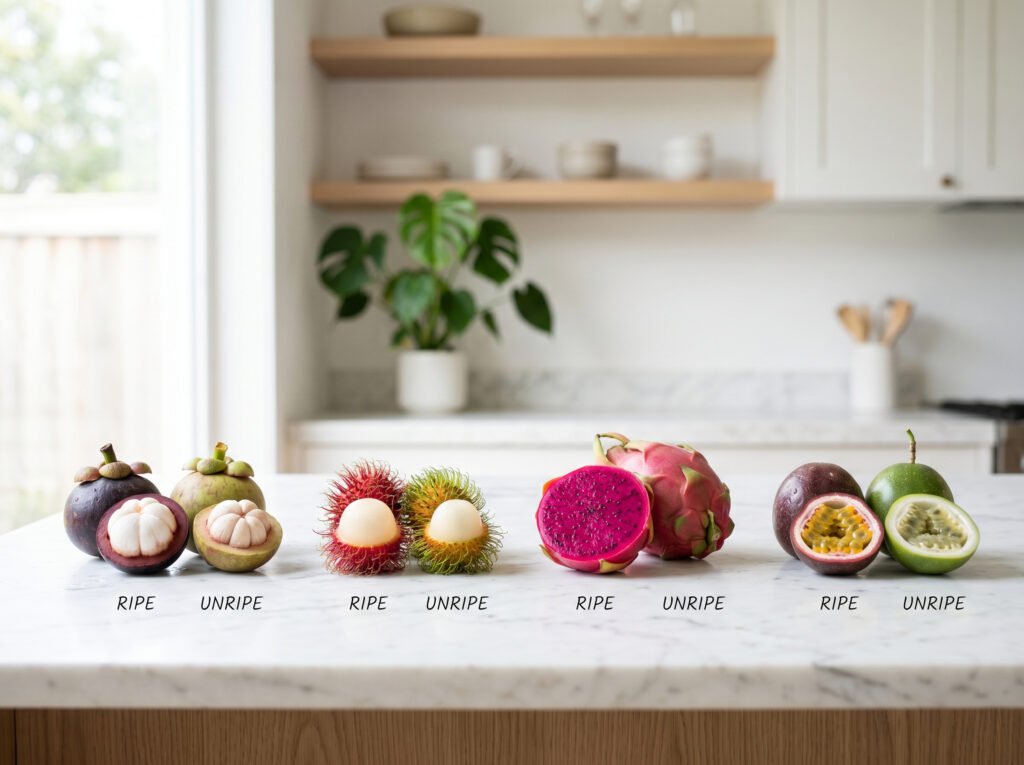
How to tell if exotic fruit is ripe is one of the most practical questions any premium fruit buyer in India can ask — and one of the most consistently unanswered. Most fruit guides cover apples and bananas. Almost none explain how to check ripeness for mangosteen, passion fruit, rambutan, or yellow pitaya — the exotic fruits that actually need guidance because they behave so differently from anything in a typical Indian fruit bowl.
This guide covers 8 imported fruits available from ProFruits, giving you the exact signs to look for at each stage of ripeness — what to look for, what to feel, what to smell, and critically, what each stage of ripeness means for taste and whether the fruit is ready to eat.
💡
Why ripeness matters more for exotic fruits: Unlike local fruits where you broadly know what ripe looks like from childhood, exotic imported fruits often ripen in ways that are counter-intuitive. A wrinkled passion fruit looks spoiled but is actually perfect. A rock-hard rambutan is underripe. A very dark mangosteen is at its best. Getting this wrong wastes a premium purchase.
How to Check If Exotic Fruit Is Ripe — All 8 Fruits
Fruit 01
Mangosteen
🇹🇭 Thailand
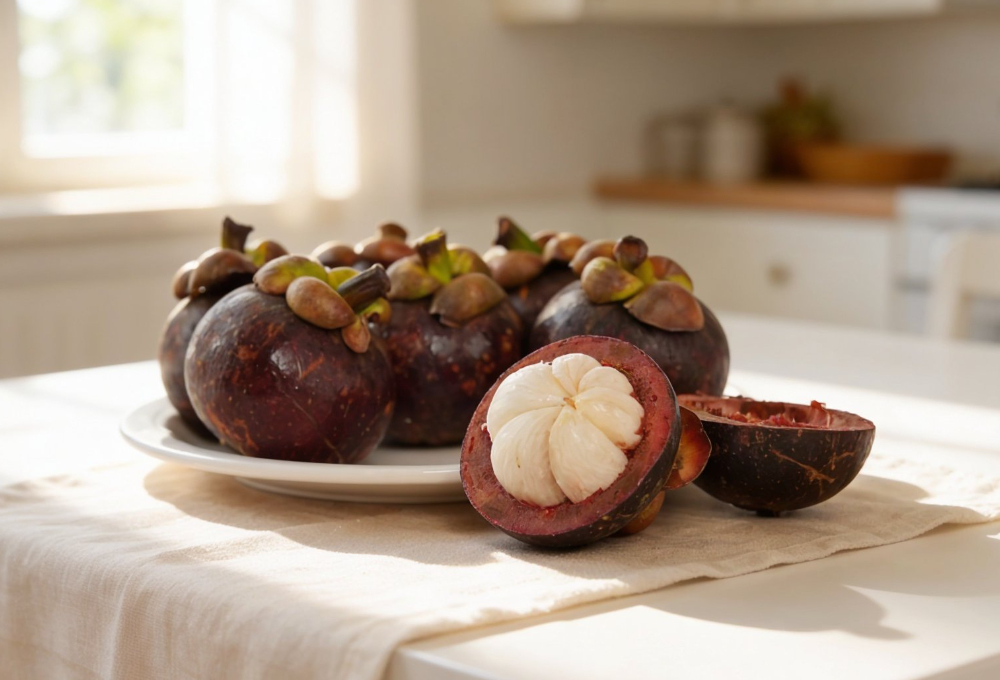
Mangosteen is one of the trickiest fruits to read because the exterior gives very little away visually. The key is a combination of colour, firmness, and the crown at the bottom of the fruit.
🟢
Underripe
Hard green-purple rind
Rock solid to touch. Bright green or very dark with no give. Flesh inside is not yet fully sweet.
🟣
Ripe — Eat Now
Deep purple, slight give
Yields gently to pressure. Rind has some flexibility. Crown petals (bottom) are still green and fresh.
⚫
Overripe
Very dark, very soft
Leaks juice when pressed. Crown petals dried or blackened. Flesh may be fermented inside.
- ✓Colour: Deep purple to maroon. Avoid any with yellowing patches — this indicates damage.
- ✓Squeeze test: Apply gentle pressure. A ripe mangosteen yields slightly like a ripe tomato. If it does not move at all, give it 1–2 more days.
- ✓Crown check: Flip it over. The crown (green flower-like petals at the base) should be green and fully intact. Count the petals — this tells you how many white segments are inside.
- ✓Smell: Faint sweet fragrance when perfectly ripe. No smell means underripe.
- ✗Avoid: Any mangosteen that is very hard, has a cracked rind, or has dried/fallen crown petals.
ProFruits tip: If your mangosteen arrives firm, leave it at room temperature for 1–2 days. Do not refrigerate an unripe mangosteen — cold halts ripening completely.
Fruit 02
Rambutan
🇹🇭 Thailand
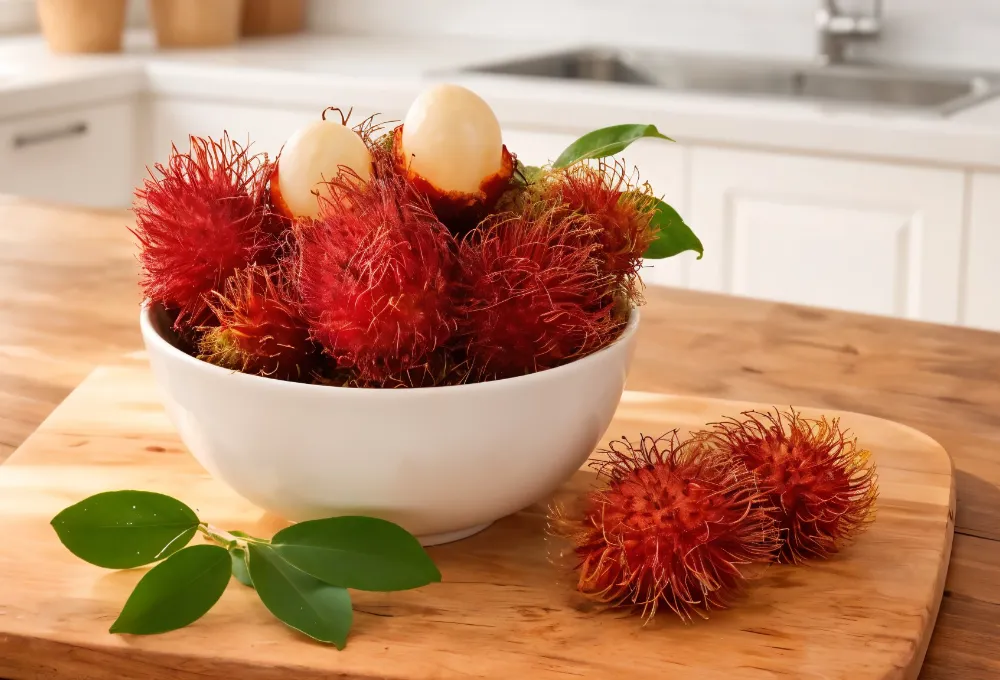
Rambutan is actually one of the easier exotic fruits to read for ripeness because the colour change is dramatic and unmistakable. The spiky tendrils (called spinterns) are your best indicator.
🟢
Underripe
Pale red or orange, firm
Tendrils are green-tipped and very firm. Flesh is there but not yet at peak sweetness.
🔴
Ripe — Eat Now
Bright red, tendrils flexible
Deep vivid red skin. Tendrils are red with green tips, pliable but not wilted. Flesh is juicy and sweet.
🟤
Overripe
Dark red, tendrils black
Skin darkens to maroon. Tendrils turn black and brittle. Flesh ferments and becomes sour.
- ✓Colour: Look for vivid, bright red skin. This is the primary and most reliable indicator for rambutan.
- ✓Tendril colour: Green-tipped tendrils on red skin = perfect ripeness. Fully red tendrils = very ripe, eat today. Black tendrils = overripe, avoid.
- ✓Firmness: The fruit should feel firm but with a very slight give. Not rock hard, not mushy.
- ✓Smell: Lightly floral and sweet when ripe. No notable smell when underripe.
- ✗Avoid: Any with black or brittle tendrils, or skin that has darkened to maroon-brown.
ProFruits tip: Rambutan is best eaten within 3–5 days of purchase. Store in the refrigerator once ripe and consume quickly — unlike many fruits, rambutan does not hold at peak quality for long.
Fruit 03
Red Dragon Fruit
🇻🇳 Vietnam
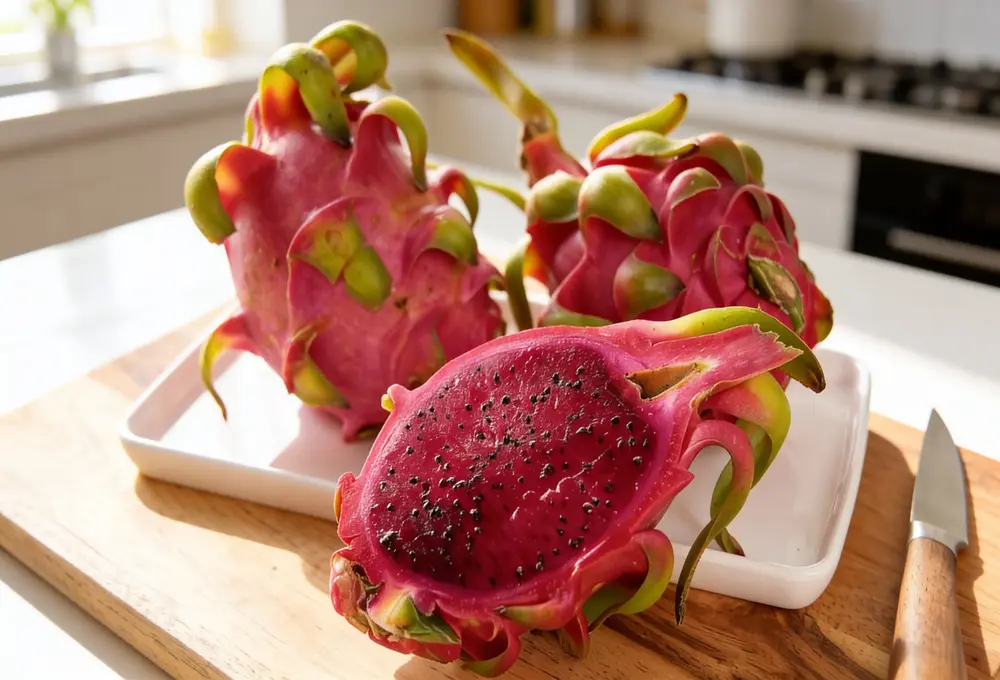
Dragon fruit ripeness is read through a combination of skin colour, the condition of the wing-like scales, and firmness. The green tips of the scales are a particularly reliable indicator.
🟢
Underripe
Green-tinged skin, hard
Skin still has green patches. Scales have prominent green tips. Rock hard to touch. Wait 2–3 days.
🍎
Ripe — Eat Now
Vivid red, slight give
Evenly red skin. Scale tips are browning slightly. Yields gently to pressure. Sweet crimson flesh inside.
🔴
Overripe
Very soft, scales dry
Large soft patches. Scales dried and shrunken. Skin may split. Flesh is mushy and losing flavour.
- ✓Scale tips: The flame-like scales on dragon fruit are the best ripeness indicator. Green tips = underripe. Slightly browned/dried tips = perfectly ripe.
- ✓Evenness of colour: A ripe red dragon fruit is uniformly deep red with no green patches remaining on the body of the fruit.
- ✓Squeeze test: Should yield slightly to gentle palm pressure, like a ripe avocado. Do not press the scales — press the body of the fruit between scales.
- ✓Stem end: The small nub where it was cut from the plant should look relatively fresh, not completely dried and shrivelled.
- ✗Avoid: Any with large soft patches, splits in the skin, or a sour/fermented smell.
ProFruits tip: Dragon fruit is almost always delivered slightly underripe to survive transit. Leave at room temperature for 1–2 days after delivery, then refrigerate once ripe.
Fruit 04
Passion Fruit
🇧🇷 Brazil
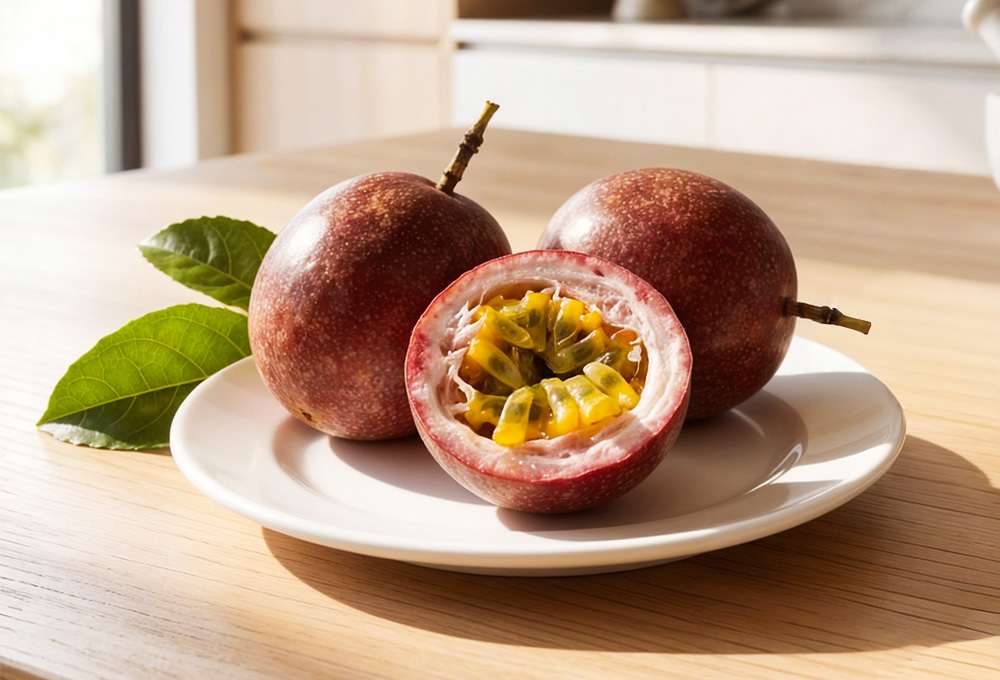
Passion fruit is the fruit that most confuses first-time buyers because the visual signs of perfect ripeness look exactly like what most people think means the fruit is old or spoiled. The key rule to remember: wrinkled = perfect.
🟣
Underripe
Smooth, plump, purple-red
Perfectly smooth skin. Feels heavy and firm. The pulp inside is not yet at peak sweetness or aroma.
🟤
Ripe — Eat Now
Heavily wrinkled skin
Deeply dimpled and wrinkled. Lighter in weight than it looks. Intensely fragrant. Pulp inside is at maximum sweetness and aroma.
⚫
Overripe
Shrivelled, very light
Skin has dried further and shrunk significantly. Pulp has reduced and lost moisture. Sour or fermented smell.
- ✓The wrinkle rule: This is the most counter-intuitive fact about passion fruit. A smooth passion fruit is underripe. A heavily wrinkled one is at peak flavour. The wrinkles indicate the water inside has reduced, concentrating the sugars and aromas.
- ✓Weight: A ripe passion fruit feels slightly lighter than you expect for its size. This is normal — moisture has been lost through the skin, concentrating the pulp.
- ✓Smell: One of the most fragrant fruits when ripe — intensely sweet and tropical. If there is no fragrance at all, it is underripe.
- ✓Shake test: A ripe passion fruit will make a very faint sloshing sound when shaken gently.
- ✗Avoid: Any with a fermented, alcoholic smell or that feel almost hollow when shaken.
ProFruits tip: If your passion fruit arrives smooth and firm, simply leave it on the counter at room temperature for 4–7 days. The skin will wrinkle as it ripens. Do not refrigerate until it has wrinkled.
Fruit 05
Yellow Pitaya
🇹🇭 Thailand
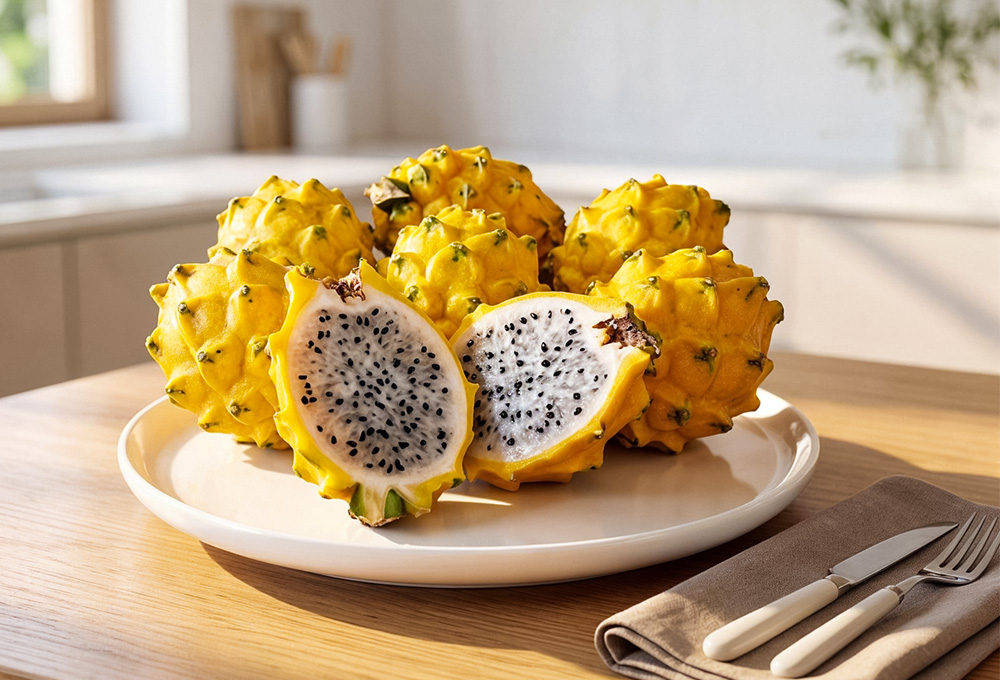
Yellow pitaya (yellow dragon fruit) ripens differently from red dragon fruit and needs its own ripeness guide. The colour transition here is more subtle — from green-tinged yellow to vivid golden yellow.
🟢
Underripe
Yellow-green, hard
Skin has green areas, especially near the scales. Very firm, no give. Flavour not yet developed.
🟡
Ripe — Eat Now
Vivid golden yellow
Evenly bright yellow skin. Scales browning at tips. Gentle give to pressure. Sweet, intense tropical flavour.
🟠
Overripe
Orange-yellow, very soft
Skin turning orange. Large soft patches. Scales shrivelled. Flavour loses brightness, becomes flat.
- ✓Golden yellow colour: Wait until the entire fruit is vivid golden yellow with no green remaining. Green patches mean it needs more time.
- ✓Scale tips: Same rule as red dragon fruit — slightly browned or dried tips on the scales indicate ripeness.
- ✓Squeeze test: Should yield gently to palm pressure. Firmer than red dragon fruit at peak ripeness due to its denser flesh.
- ✓Fragrance: A ripe yellow pitaya has a noticeably sweeter, more tropical fragrance than red dragon fruit. Smell near the base.
- ✗Avoid: Any with orange skin (overripe) or that feel completely hollow when tapped.
ProFruits tip: Yellow pitaya is sweeter than red dragon fruit and needs to be eaten at peak ripeness to experience the full flavour difference. Do not rush it — if it arrives green-tinged, give it 2–3 days at room temperature.
Fruit 06
Zespri Golden Kiwi
🇳🇿 New Zealand
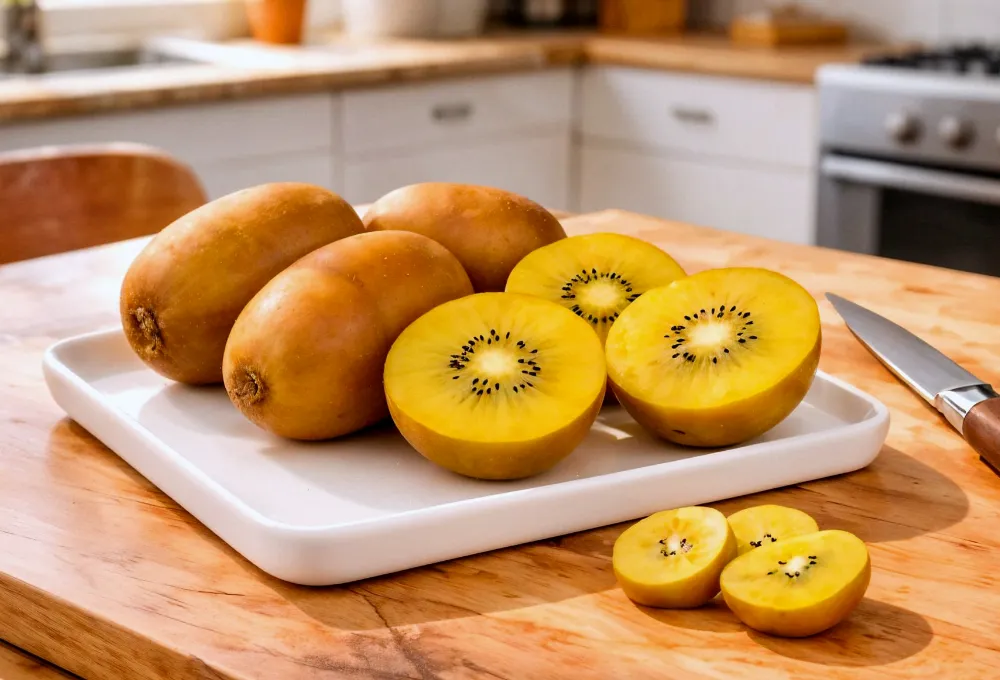
Golden kiwi ripens more quickly and more uniformly than green kiwi, and the signs are easier to read. The key difference from green kiwi: golden kiwi should never be eaten hard — always wait for the give.
🟡
Underripe
Rock hard, no give
Completely firm to touch, no flex anywhere. Skin may have greenish tinge. Tart and not sweet. Needs 2–4 days.
🟢
Ripe — Eat Now
Golden skin, soft at stem
Yields to gentle pressure near the stem end first. Golden-bronze skin. Sweet floral aroma. Flesh is full golden colour inside.
🟤
Overripe
Very soft, wrinkled skin
Soft all over including at the base. Skin begins to wrinkle. Fermented sweet smell. Flesh collapses when cut.
- ✓The stem-end test: Press gently near the stem end (top) of the kiwi. This is where ripeness appears first. If it yields there, the whole fruit is ready.
- ✓Skin colour: A ripe Zespri Golden Kiwi has an even golden-bronze skin tone. Greenish patches mean it needs more time.
- ✓Fragrance: A ripe golden kiwi smells distinctly sweet and slightly floral near the stem end. This fragrance is more pronounced than green kiwi.
- ✓All-over softness: Unlike green kiwi, golden kiwi ripens fairly evenly. When the whole fruit has a gentle give, it is at peak quality.
- ✗Avoid: Any that feel very soft all over, have shrivelled skin, or smell fermented.
ProFruits tip: Golden kiwi ripens faster than green kiwi at room temperature. If buying several, keep some in the refrigerator to slow ripening and stagger your eating window across a week.
Fruit 07
Persimmon
🇪🇸 Spain
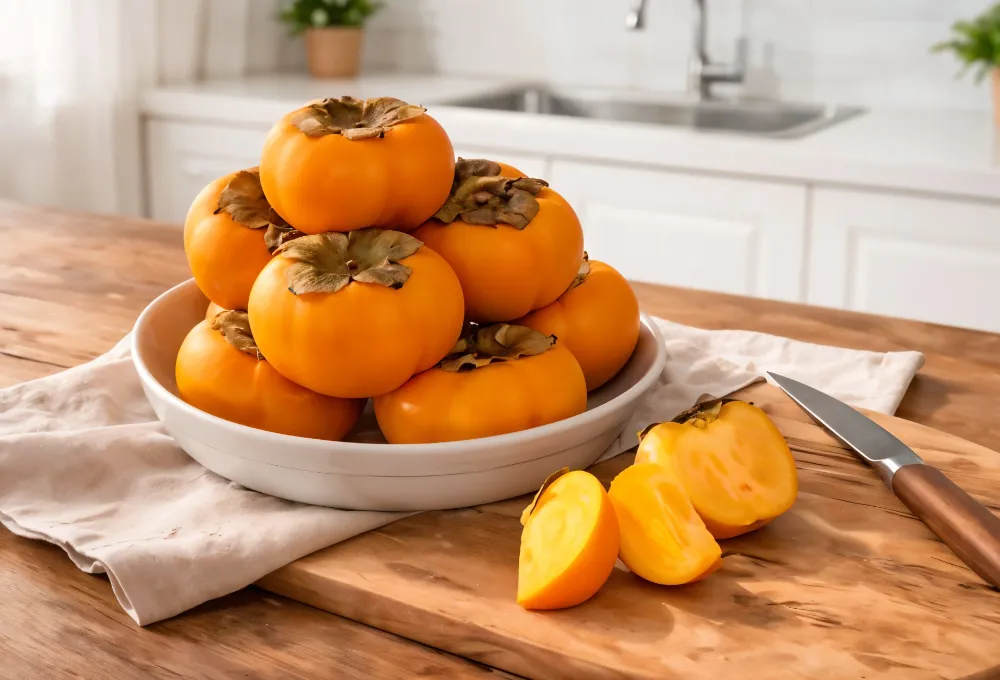
Persimmon has two very different ripeness profiles depending on the variety. The Fuyu type (flat-bottomed, most common from Spain) can be eaten firm. The Hachiya type must be fully ripe or it will be extremely astringent and almost inedible. ProFruits sources the Fuyu-style variety from Spain.
🟠
Can Eat Firm
Firm, bright orange
For Fuyu variety: can be eaten when still firm, like an apple. Mildly sweet, crisp texture.
🟡
Peak Ripe
Deep orange, soft give
Deep, rich orange colour. Gives to gentle pressure. Sweetness is at maximum. Skin looks slightly translucent.
🟤
Overripe
Mushy, collapsing skin
Feels like a water balloon. Skin starts to collapse. Internal breakdown reduces quality significantly.
- ✓Colour depth: The deeper and more saturated the orange, the riper the persimmon. A bright, vivid orange means peak or near-peak ripeness.
- ✓Firmness preference: Fuyu persimmon (the Spanish variety) can be enjoyed at two stages — crisp-firm like an apple, or soft and jammy like a very ripe fruit. Both are valid; the flavour is sweeter when soft.
- ✓Skin translucency: When a persimmon is fully ripe, the skin develops a slightly translucent quality near the stem end — you can almost see the flesh through it.
- ✓Leaf check: The green calyx (leaves at the top) should look fresh and flat against the fruit. Curled or dried leaves indicate the fruit is past its best.
- ✗Avoid: Any that feel like liquid inside when gently squeezed, or with cracked skin.
ProFruits tip: Persimmons ripen beautifully at room temperature over 3–5 days. If you prefer the crisp texture, eat immediately. If you prefer maximum sweetness, wait until the fruit yields completely to pressure.
Fruit 08
Korean Pear
🇰🇷 South Korea
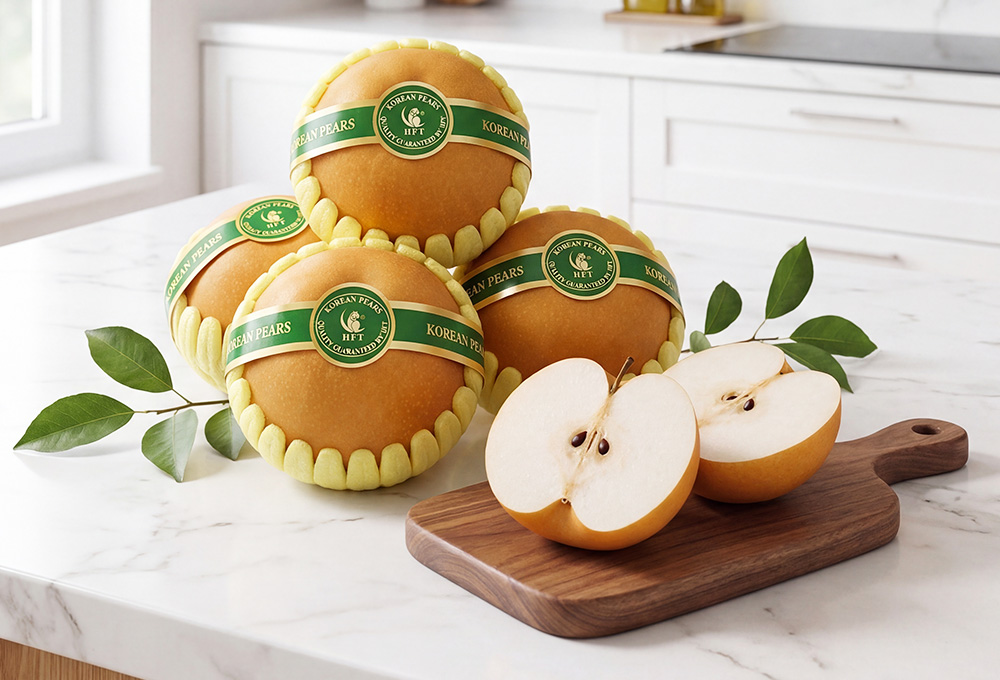
Korean pear (also called Asian pear or nashi pear) is unique because unlike European pears, it is meant to be eaten crisp — not soft. It does not soften like a Western pear as it ripens. Checking ripeness here is about colour and aroma, not softness.
🟢
Underripe
Pale, green-yellow tinge
Skin is pale with greenish tone. Lacks the characteristic honey fragrance. Flesh is there but flavour not fully developed.
🟡
Ripe — Eat Now
Golden yellow, fragrant
Warm golden-yellow russet skin. Strong honey-sweet fragrance. Crisp, juicy flesh — never soft. This is how it should be eaten.
🟤
Overripe
Dark patches, mealy texture
Brown patches developing on skin. Flesh becomes mealy and grainy rather than crisp. Flavour flattens.
- ✓Important rule: Korean pear is always crisp when ripe. Do not wait for it to soften like a European pear — it will not, and if it does, it is overripe.
- ✓Colour: Golden-yellow to russet-brown is perfect. Pale and greenish means needs more time.
- ✓Fragrance: A ripe Korean pear has a distinctive, intensely sweet honey fragrance. Smell near the base of the fruit. This is the most reliable ripeness indicator.
- ✓Skin texture: Should feel smooth and slightly waxy. The russet (rough texture) patches are normal and indicate quality, not overripeness.
- ✗Avoid: Any with large dark brown patches, dented areas, or a mealy feel when pressed.
ProFruits tip: Korean pears have an excellent shelf life compared to most imported fruits — they will hold in the refrigerator for 2–3 weeks without quality loss. They are typically delivered ready to eat.
Quick Reference: Exotic Fruit Ripeness at a Glance
Use this as your go-to cheat sheet whenever a ProFruits delivery arrives.
| Fruit |
Ready When |
Not Ready When |
Ripen At Home? |
| Mangosteen |
Deep purple, slight give, green crown |
Rock hard, no give |
Yes — room temp 1–2 days |
| Rambutan |
Vivid red, green-tipped tendrils |
Orange skin, firm tendrils |
Yes — room temp 1–2 days |
| Red Dragon Fruit |
Evenly red, slightly browned scale tips |
Green patches on skin |
Yes — room temp 1–2 days |
| Passion Fruit |
Heavily wrinkled skin, strong fragrance |
Smooth, plump, no fragrance |
Yes — room temp 4–7 days |
| Yellow Pitaya |
Vivid golden yellow, scale tips browning |
Green-yellow, hard |
Yes — room temp 2–3 days |
| Zespri Golden Kiwi |
Yields at stem end, golden-bronze skin |
Rock hard, no give anywhere |
Yes — room temp 2–4 days |
| Persimmon |
Deep orange, gives to pressure |
Pale orange, very firm |
Yes — room temp 3–5 days |
| Korean Pear |
Golden-yellow, honey fragrance, crisp |
Pale green-yellow, no fragrance |
Minimal — usually arrives ready |
Shop Fresh Exotic Fruits in Mumbai
All 8 fruits in this guide are available now at ProFruits — cold-chain sourced, next-day delivered, and at peak eating quality when they arrive.
🍊 Browse All Exotic Fruits
FAQs About Exotic Fruit Ripeness
How do I tell if exotic fruit is ripe without cutting it open?
Use the squeeze test, colour check, and smell test in combination. Every fruit in this guide has reliable external indicators: mangosteen (slight give + deep purple), rambutan (vivid red + green-tipped tendrils), passion fruit (heavily wrinkled skin), dragon fruit (slightly browned scale tips), golden kiwi (soft at stem end), persimmon (deep orange + gives to pressure), Korean pear (honey fragrance), yellow pitaya (vivid golden yellow).
Why does my passion fruit look wrinkled — is it bad?
No — a heavily wrinkled passion fruit is perfectly ripe and at peak flavour. This is the most common misconception about passion fruit. The wrinkles indicate the water content has reduced, concentrating the sugars and tropical aroma. Smooth passion fruit is actually underripe.
Can I speed up ripening of exotic fruits at home?
Yes. Place the fruit in a paper bag with a banana or apple at room temperature. The ethylene gas these fruits naturally release accelerates ripening. This works for mangosteen, dragon fruit, golden kiwi, persimmon, and yellow pitaya. Do not refrigerate exotic fruits that are still underripe — cold halts the ripening process entirely.
How long do exotic fruits last once ripe?
Rambutan: 3–5 days refrigerated. Mangosteen: 3–5 days refrigerated. Dragon fruit: 5–7 days refrigerated. Passion fruit: 1 week refrigerated once wrinkled. Golden kiwi: 1–2 weeks refrigerated. Persimmon: 1 week refrigerated. Korean pear: 2–3 weeks refrigerated.
Hi, I’m Tanish Hingorani, a Business student with a passion for food, flavour, and everything that makes eating an experience worth talking about. As a baker, I bring a hands-on understanding of ingredients, quality, and the art of turning something simple into something extraordinary — which is exactly what drives my love for exotic and premium fruits. Through my blogs on ProFruits, I share honest insights, practical guides, and fresh perspectives on how the right fruits can transform your health, your kitchen, and your gifting game. Whether I’m breaking down the best seasonal picks in Mumbai or exploring the world of imported exotics, my goal is to make every read genuinely useful and every order feel like the right one.