
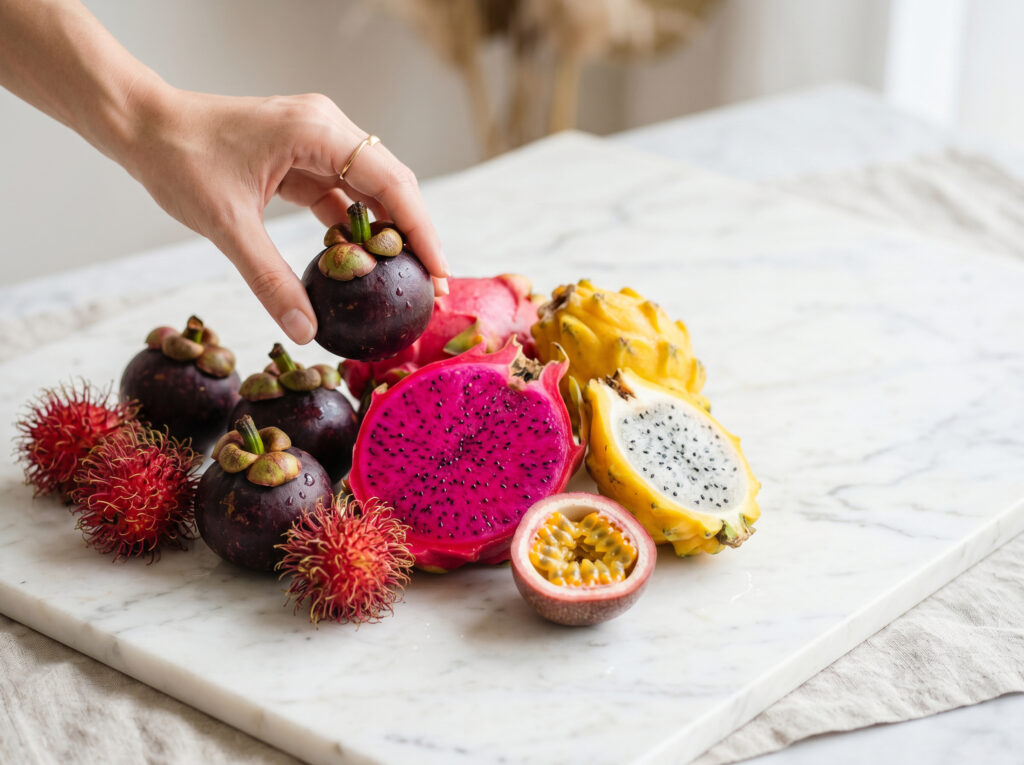
Imported fruits in India sit at a price point that makes most people pause. A punnet of Chilean cherries for ₹899. A kilo of Thai mangosteen for ₹1,199. A single Korean pear for ₹1,049. The natural reaction is to ask whether these prices are justified — or whether you are simply paying for a label and a logo.
This blog gives you the honest answer. Not a sales pitch, but a clear breakdown of exactly what drives the price of imported fruits in India, what you actually get for that premium, and the cases where the price is genuinely worth it versus when it is not. By the end, you will have a framework for making smarter decisions every time you consider buying an exotic or imported fruit.
Why Are Imported Fruits Expensive in India? The Real Reasons
The price of imported fruits in India is not arbitrary. Every rupee above the cost of a local fruit reflects a specific, traceable cost in the supply chain. Here are the six genuine reasons why imported fruits cost what they do.
✈️ Distance — Thousands of Kilometres, Every Time
A kilo of cherries from Chile travels approximately 17,000 kilometres to reach Mumbai. Kiwi from New Zealand covers 10,500 kilometres. Rambutan from Thailand crosses over 3,000 kilometres. Every kilometre of that journey requires fuel, logistics coordination, handling, and time — all of which add cost before the fruit even clears Indian customs.
Air freight — which is used for the most delicate and perishable fruits — costs significantly more than sea freight. A kilo of cherries air-freighted from Chile can cost ₹300–400 in freight alone before any retail margin is applied. This is not a mark-up. It is the cost of physics.
❄️ Cold Chain — The Infrastructure Nobody Sees
Imported fruits that are worth eating arrive via an unbroken cold chain: refrigerated storage at origin, temperature-controlled containers during transit, cold storage at the Indian port, refrigerated vehicles to the distribution point, and cold-chain maintained packaging on delivery. A single break in this chain — even a few hours at the wrong temperature — can ruin an entire shipment of berries, cherries, or mangosteen.
Maintaining this infrastructure is expensive. Cold storage facilities, refrigerated vehicles, temperature monitoring systems — all of this is built into the price. When you buy imported fruits from a reputable source like ProFruits, you are paying for this infrastructure. When you buy from a street vendor selling imported cherries at half the price, the cold chain has almost certainly been compromised.
📋 Import Duties & Customs — Government-Imposed Costs
India imposes significant import duties on fresh fruits. According to the Central Board of Indirect Taxes and Customs, import duties on fresh fruits range from 30% to 100% depending on the variety. Cherries, for example, attract a 100% basic customs duty. Kiwi faces 30%. These duties are applied to the CIF (Cost + Insurance + Freight) value, meaning they compound on top of already-elevated transport costs.
Beyond the basic duty, imported fruits are also subject to GST, FSSAI testing fees, handling charges, and cold storage facility fees at the port. The cumulative duty and tax burden on a kilo of imported cherries can easily add ₹400–600 to the landed cost before a single rupee of retail margin is applied.
🏆 Only Export-Grade Fruit Is Shipped
Fruit exported from countries like Chile, New Zealand, and Thailand for the international premium market is not the same fruit sold locally. Export-grade fruit must meet strict size, colour, sugar content (Brix level), and blemish standards set by importing country regulations and buyer specifications. A Chilean cherry must meet minimum size (28mm+), minimum sugar content, and zero surface defects to be packed for export.
This selection process means only the top 20–30% of any harvest qualifies for export. The rest is sold domestically at lower prices. When you buy imported fruit in India, you are buying from that top tier — not the average of the harvest, but the best of it. The price reflects this selection, not just the transport.
⏳ Short Shelf Life — The Perishability Premium
Imported fruits, particularly berries, cherries, and mangosteen, have short eating windows. A punnet of blueberries that has been cold-chain managed correctly has 5–7 days of quality eating left when it arrives. Cherries in peak condition last 3–5 days after delivery. If stock does not sell within that window, the entire inventory is a loss.
Sellers of imported fruits carry significant wastage risk. Any unsold inventory at the end of its eating window cannot be discounted gradually like a non-perishable — it is a total write-off. This risk is priced into the cost of every unit sold. The faster the turnover and the better the cold chain, the lower this wastage premium needs to be — which is why high-volume specialist importers like ProFruits can offer better value than small retailers with slow stock movement.
🌊 Seasonal Scarcity — Price Follows Supply
Many premium imported fruits have narrow seasonal windows. Chilean cherries peak between November and February. New Zealand Zespri kiwi seasons run from May to October. Thai mangosteen is available May through August. Outside these windows, the fruit either unavailable or sourced from secondary origins at higher cost.
When a fruit is in its peak season from a primary origin, prices are at their most competitive. Out of season, prices rise sharply — sometimes by 50–100% — because supply is constrained and sourcing is more expensive. Understanding seasonality is the single most effective way to get better value from imported fruits in India.
Imported Fruits vs Local Fruits — The Honest Comparison
The question of whether imported fruits are worth the price only makes sense when compared honestly against what local alternatives actually offer. Here is a direct side-by-side on the dimensions that matter most to Indian buyers.
| Factor | 🌍 Imported Fruits | 🇮🇳 Local Indian Fruits |
|---|---|---|
| Flavour consistency | Export-grade, standardised Brix levels | Variable — depends on season and seller |
| Nutritional quality | Cold-chain preserved — minimal degradation | Often affected by heat, handling, ripeners |
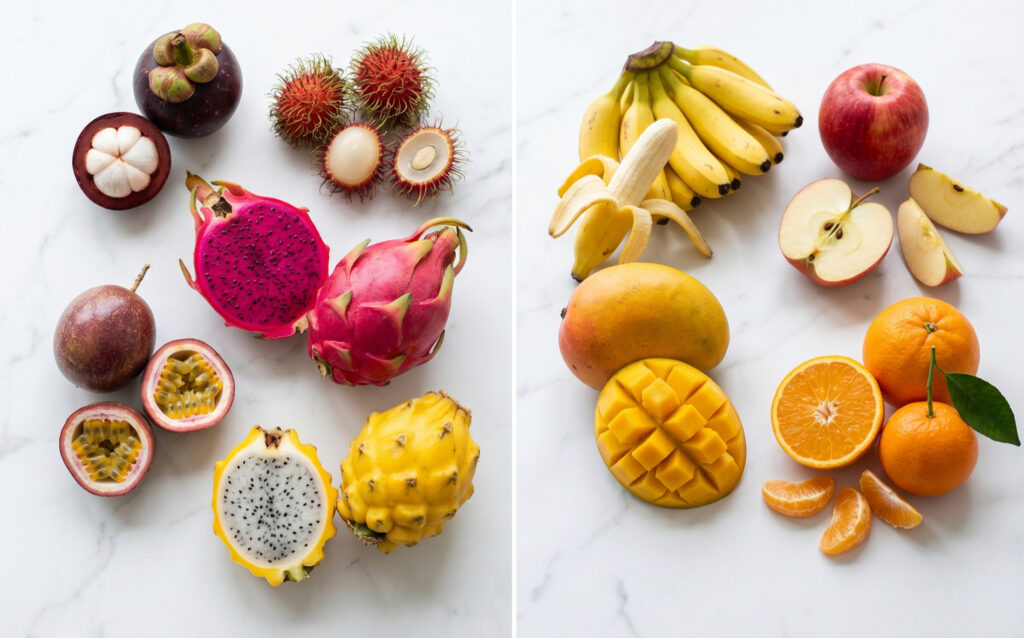
| Variety | Access to global varieties unavailable locally | Limited to Indian climate-appropriate species |
| Ripening process | Natural — no ethylene gas or carbide used | Street fruit often artificially ripened |
| Price | Higher — 3–10x local equivalents | Significantly lower |
| Pesticide standards | Must meet FSSAI MRL standards for import | Domestic MRL enforcement more variable |
| Seasonal availability | Global sourcing extends availability year-round | Strictly seasonal |
| Gifting suitability | Premium presentation, luxury perception | Functional, everyday gifting only |
The honest verdict: For everyday daily fruit consumption — bananas, guavas, chikoo, local mangoes — Indian fruit is excellent value and nutritionally comparable. Imported fruits earn their premium when you want something genuinely unavailable locally, when quality and consistency matter (gifting, special occasions, health-specific applications), or when the flavour experience itself is the point.
When Are Imported Fruits Actually Worth the Price?
Not every situation justifies the premium. Here is a practical framework for knowing when to spend and when to save.
Imported fruits as gifts carry a premium perception that local fruit simply cannot match. A box of Chilean cherries or Thai mangosteen communicates thoughtfulness and generosity in a way a kilo of local bananas does not. For birthdays, get well soon, corporate gifting — the price is worth it.
Some imported fruits provide nutritional benefits with no local equivalent. Blueberries for anthocyanins. Avocado for folate and healthy fats. Kiwi for dense folate content. If you are targeting a specific nutritional outcome, the import premium is justified by the unique nutrient profile.
A fruit platter for a celebration, a premium fruit hamper for a wedding, an exotic fruit tasting experience — these are moments where the price-per-experience calculation is completely different from everyday snacking. The exotic nature of imported fruit adds to the occasion.
For pregnancy nutrition, cancer recovery, specific therapeutic diets, or working with a dietitian who has recommended specific imported fruits — the health outcome justifies the cost in a way that everyday snacking does not require.
ProFruits Imported Fruits — What You Actually Get for the Price
To make this concrete, here is what the exotic fruits price in Mumbai looks like for six of ProFruits’ most popular imported fruits — with context for exactly what each price buys you.
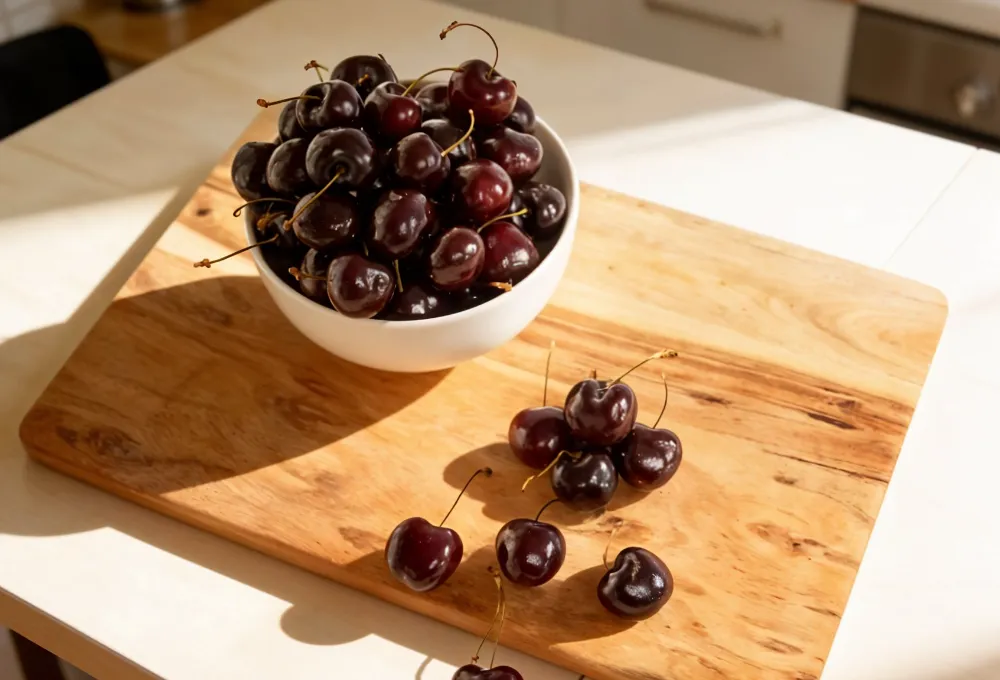
Red Cherry
Air-freighted from Chile. Export-grade, 100% duty-paid, cold-chain maintained. The price reflects 17,000km of refrigerated logistics and 100% import duty.
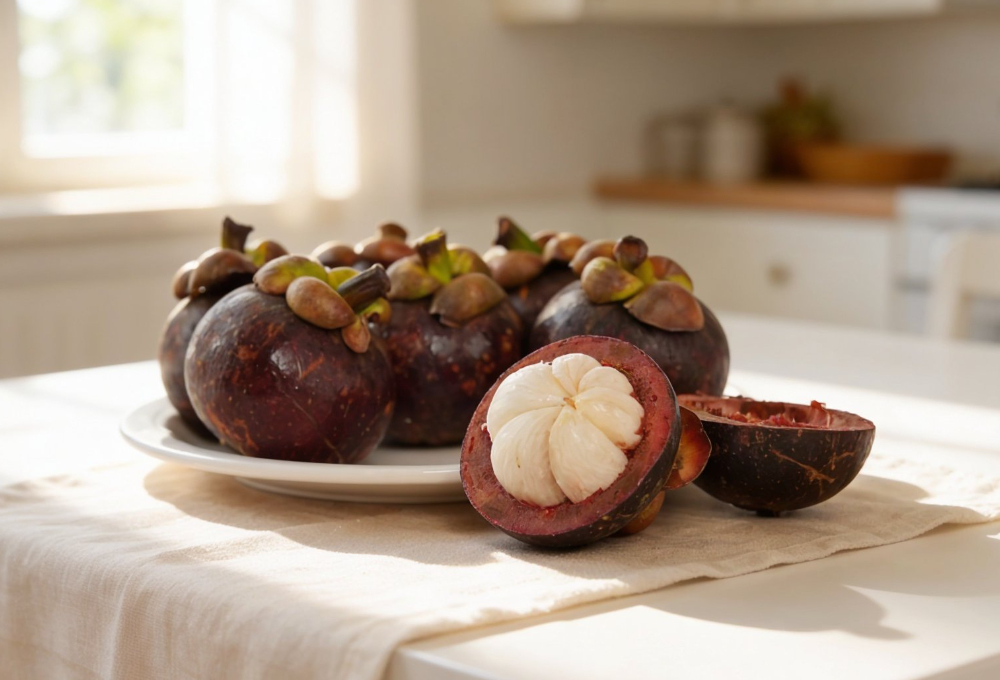
Mangosteen
The Queen of Fruits. Short seasonal window, high perishability, intense quality demands. Sourced at peak ripeness and cold-chain delivered to Mumbai.
OZblu Blueberry
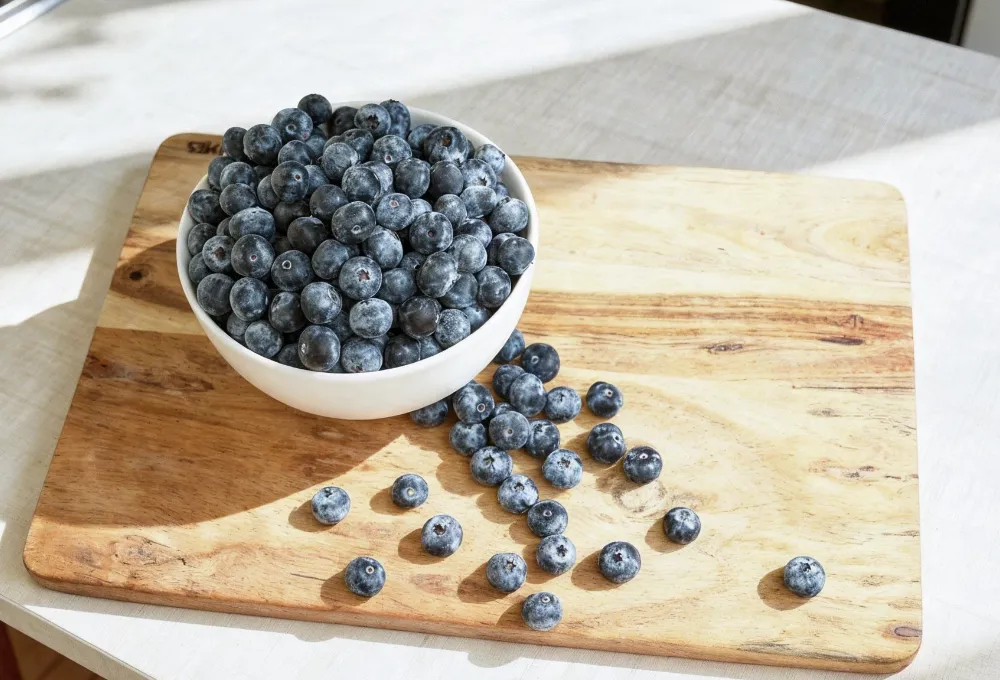
Premium OZblu variety. Exceptionally large, consistently sweet. Blueberries are one of the most fragile imported fruits — cold chain is everything.
Zespri Golden Kiwi
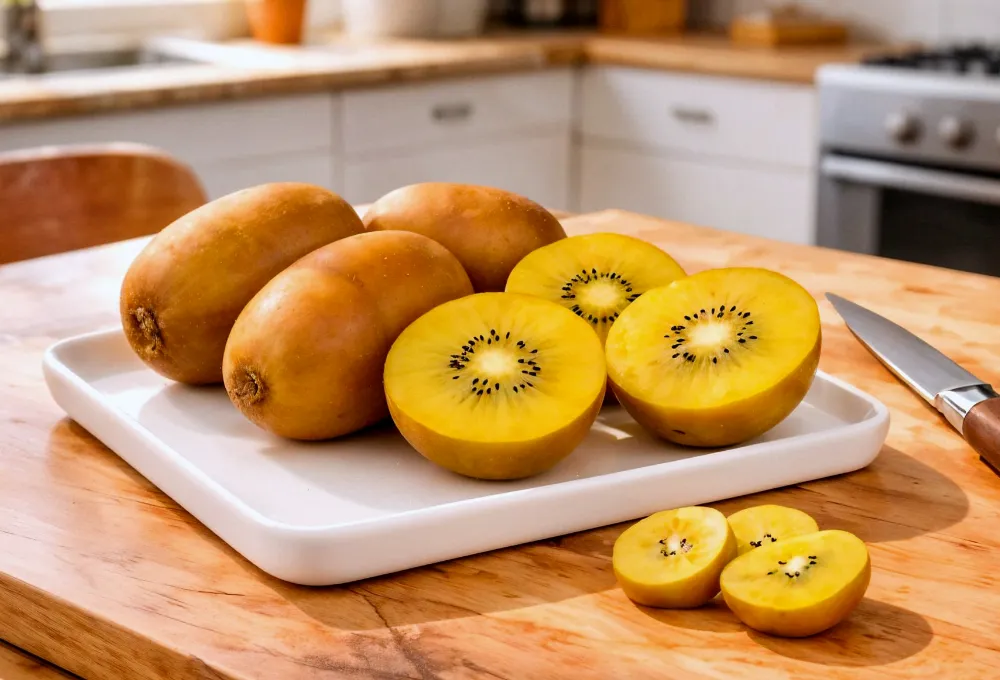
New Zealand’s premium Zespri variety. Sweeter and less acidic than green kiwi. 10,500km cold-chain journey. Worth every rupee for folate and Vitamin C density.
Rambutan
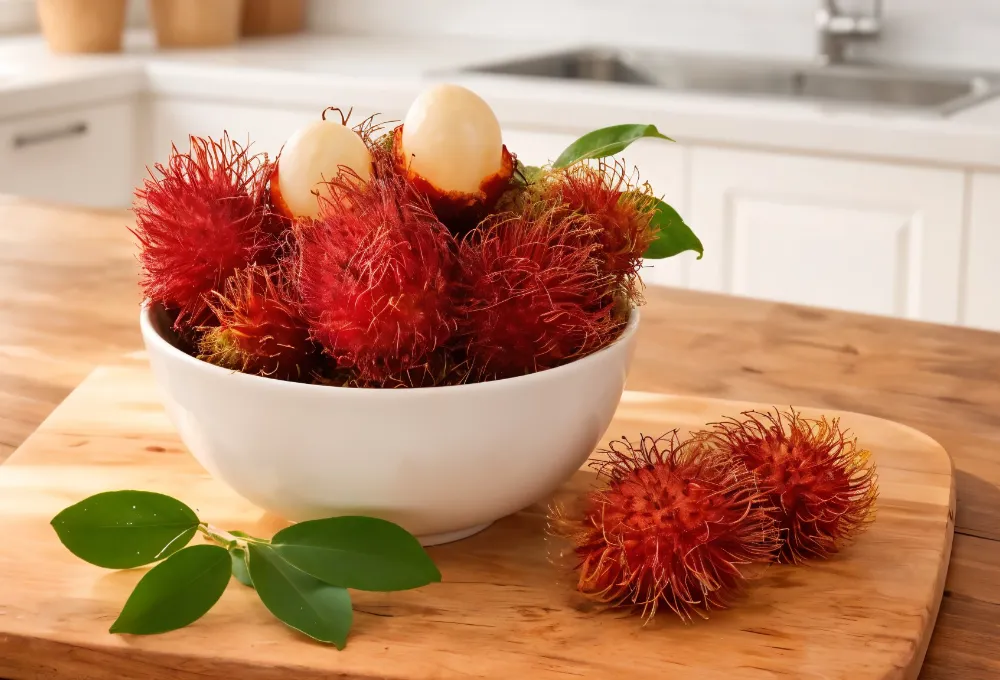
No Indian equivalent exists for rambutan. Hairy, sweet, lychee-like — entirely unavailable locally. The import premium is the only way to access this fruit.

Korean Pear
Famously crisp, juicy, and enormous. A single Korean pear is a complete luxury eating experience. The gift equivalent of a premium chocolate box.
How to Get the Best Value from Imported Fruits in India
Understanding pricing is only half the picture. Here is how to make sure every rupee you spend on exotic fruits price in Mumbai is well spent.
Buy in season from the primary origin
Cherries from Chile peak November–February. Mangosteen from Thailand is best May–August. Zespri kiwi from New Zealand runs May–October. Buying in-season from the primary origin means better quality, higher stock freshness, and the most competitive pricing of the year. Out-of-season imports are more expensive and often lower quality.
Buy from cold-chain specialists, not street vendors
This is the single most important factor in the value equation for imported fruits. A punnet of blueberries that has been cold-chain maintained is worth ₹799. The same blueberries after two days at room temperature in a street stall are worth nothing — the taste, texture, and nutritional value have degraded significantly. Always buy imported fruits from retailers with verified cold storage and fast stock turnover.
Use imported fruits strategically, not daily
The value of imported fruits in India is maximised when they are used for their unique properties — as gifts, for specific nutritional purposes, for special occasions, or for experiencing flavours unavailable locally. Using them as a daily replacement for local fruits is rarely justified by the price differential. Use both: local fruits for everyday nutrition, imported fruits for the moments they genuinely earn their price.
Know what you are paying for
When you pay ₹899 for 500g of Chilean cherries from ProFruits, you are paying for: export-grade fruit selected from the top 20% of the harvest, 17,000km of cold-chain logistics, 100% import duty, FSSAI-compliant quality testing, cold-chain maintained storage in Mumbai, and next-day delivery to your door. When you see “imported cherries” for ₹300 at a roadside stall, ask which of those elements has been skipped.
Shop Imported Fruits in Mumbai
Premium imported fruits — cold-chain sourced, fully duty-paid, next-day delivered across Mumbai. Cherries, mangosteen, kiwi, blueberries, rambutan and more.
🍎 Browse All Imported FruitsFAQs About Imported Fruits in India
Why are imported fruits so expensive in India?
The main drivers are: long-distance air or sea freight, cold-chain infrastructure from source to delivery, import duties ranging from 30% to 100% depending on the fruit, export-grade quality selection (only the top tier of each harvest is shipped), and the perishability risk built into every unit sold. All of these costs are genuine, traceable, and not arbitrary mark-ups.
Are imported fruits worth the price in India?
For gifting, specific nutritional purposes, special occasions, and experiencing flavour profiles unavailable from Indian produce — yes, the price is genuinely worth it. For daily everyday fruit consumption, local Indian seasonal fruits offer comparable nutrition at far lower cost. The right answer depends on the purpose of the purchase.
What is the best way to buy imported fruits in Mumbai?
Buy from a cold-chain specialist with verified storage and fast stock turnover. ProFruits imports directly from origin countries, maintains full cold-chain from source to Mumbai, and delivers next-day. Avoid imported fruit from street vendors or retailers with no verifiable cold storage history — the quality difference is significant.
Which imported fruits offer the best value in India?
Zespri Golden Kiwi (₹349 / 3 pieces) offers exceptional nutritional density at a relatively accessible price. Longan (₹295 / 500g) is the most affordable imported exotic fruit on ProFruits. For premium experiences, mangosteen and rambutan have no local equivalent and justify their price entirely on uniqueness. Red dragon fruit (₹595/kg) offers visual and nutritional impact at a mid-range price point.
Do imported fruits have higher nutritional value than local fruits?
Not categorically — many Indian fruits are nutritionally excellent. However, imported fruits that maintain their cold chain arrive with their nutrients intact, while local fruits that have sat at room temperature or been chemically ripened may have compromised nutritional profiles. The key variable is cold-chain integrity, not origin.

Hi, I’m Tanish Hingorani, a Business student with a passion for food, flavour, and everything that makes eating an experience worth talking about. As a baker, I bring a hands-on understanding of ingredients, quality, and the art of turning something simple into something extraordinary — which is exactly what drives my love for exotic and premium fruits. Through my blogs on ProFruits, I share honest insights, practical guides, and fresh perspectives on how the right fruits can transform your health, your kitchen, and your gifting game. Whether I’m breaking down the best seasonal picks in Mumbai or exploring the world of imported exotics, my goal is to make every read genuinely useful and every order feel like the right one.