
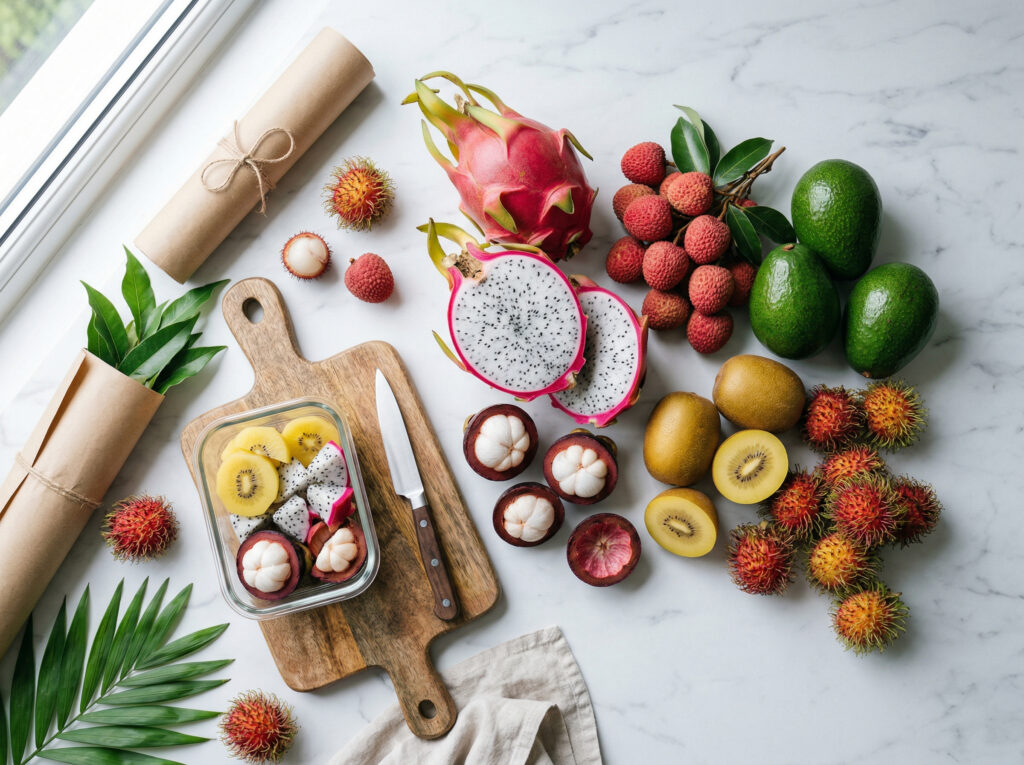
You’ve just received a beautiful delivery of exotic fruits — vibrant dragon fruit, velvety mangosteen, plump lychees, and creamy avocados. The colours are stunning, the fragrance divine. But a few days later, half of them have gone soft or overripe before you even got to them. Sound familiar?
Knowing how to store exotic fruits properly is the difference between a week of tropical indulgence and a disappointing waste. Unlike everyday fruits, exotic varieties come with their own unique storage needs — temperature sensitivities, ethylene reactions, humidity preferences — that most of us simply weren’t taught. This comprehensive guide covers everything you need to know about exotic fruit storage tips to keep your premium fruits at peak freshness, longer.
40%
of exotic fruit spoilage is caused by incorrect storage temperature
3×
longer shelf life when stored correctly vs. left on the counter
5–7
extra days freshness with simple airtight container techniques
1. Understanding How Exotic Fruits Ripen — and Why It Matters
Before diving into exotic fruit storage tips, it helps to understand a key science concept: ethylene gas. Many fruits produce ethylene as they ripen — a natural plant hormone that signals neighbouring fruits to ripen faster too. This is brilliant when you want to speed up an unripe mango, but disastrous when you accidentally leave an avocado next to your mangosteen.
Exotic fruits fall into two broad categories based on how they handle ethylene:
Climacteric fruits
Continue ripening after harvest. Mango, papaya, avocado, kiwi, banana. Can be stored unripe and ripened at home.
Non-climacteric fruits
Stop ripening once picked. Lychee, mangosteen, rambutan, pineapple. Must be stored correctly from the moment you receive them.
Temperature sensitive
Most tropical exotics are cold-sensitive below 10°C. Chilling injury causes darkening, pitting, and loss of flavour.
Humidity matters
High humidity accelerates mould. Low humidity causes shrivelling. Most exotics prefer 85–95% relative humidity.
Pro tip: Never store high-ethylene fruits (mango, avocado, banana) next to ethylene-sensitive ones (lychee, mangosteen, rambutan). The sensitive fruits will overripen and spoil within 24–36 hours.
The ripeness test before storage
Always check ripeness before deciding where to store. Unripe fruit goes at room temperature to ripen; ripe fruit goes into cold storage immediately to pause the ripening process. Storing ripe fruit on the counter is one of the most common mistakes people make — and a guaranteed way to lose it within 1–2 days in India’s warm climate.
2. The Golden Rules: Fridge, Counter, or Freezer?
One of the most searched questions around how to store exotic fruits at home is simply: does it go in the fridge or not? The answer varies by fruit, but here are the universal rules that apply across all exotic varieties.
Never refrigerate unripe tropical fruits
Cold temperatures halt the ripening process permanently in climacteric fruits. An unripe mango that goes in the fridge will never ripen properly — it’ll stay firm but develop off-flavours and a mealy texture.
Refrigerate only when ripe (and not all fruits)
Ripe mango, papaya, dragon fruit, and kiwi can safely go in the fridge in a sealed bag or container. But lychee, rambutan, and longan are best stored in the fridge from the start — they do not ripen further off the tree.
Use the crisper drawer for humidity control
The crisper drawer of your fridge maintains higher humidity than the main shelf — ideal for berries, lychee, and rambutan. Keep the vent slightly open for fruits that produce gas, like papaya.
Freezing is a valid long-term option for many exotics
Dragon fruit, mango, papaya, lychee, and passion fruit pulp all freeze beautifully. Peel, dice, spread on a tray to freeze individually, then transfer to a zip-lock bag. They’ll last 3–6 months and are perfect for smoothies.
Keep away from direct sunlight and heat sources
Even counter-ripe fruits should be kept in a cool, shaded spot away from windows, stove tops, or any appliance that radiates heat. In Indian summers, a kitchen counter near the window can easily exceed 35°C.
Common mistake to avoid: Storing exotic fruits in sealed plastic bags without ventilation accelerates condensation and mould growth. Always use paper towels to absorb moisture, or use ventilated produce bags inside the fridge.
3. Fruit-by-Fruit Storage Guide for Popular Exotic Varieties
This is the heart of every exotic fruit storage tips guide — the specifics. Every fruit has its own preferences, and once you know them, you’ll almost never lose an exotic fruit to spoilage again.
| Fruit | Unripe | Ripe | Cut/Open | Shelf Life (Ripe) |
|---|---|---|---|---|
| Dragon Fruit | Counter | Fridge | Airtight container, fridge | 5–7 days in fridge |
| Mangosteen | Counter | Fridge | Airtight container, consume same day | 3–5 days in fridge |
| Lychee | Fridge always | Fridge | Fridge, eat within 2 days | 1–2 weeks in fridge |
| Rambutan | Fridge always | Fridge | Fridge, eat within 1 day | 1 week in fridge |
| Avocado | Counter | Fridge | Lemon juice + fridge | 3–5 days in fridge |
| Kiwi | Counter | Fridge | Airtight container, fridge | 1–2 weeks in fridge |
| Passion Fruit | Counter | Fridge | Scoop pulp, airtight jar | 5–7 days in fridge |
| Papaya | Counter | Fridge | Wrap tightly, fridge | 3–5 days in fridge |
| Star Fruit | Counter | Fridge | Airtight container, fridge | 1 week in fridge |
Dragon fruit: the easiest exotic to store
Dragon fruit has a naturally tough outer skin that acts as a protective shell. An unripe dragon fruit (bright pink but still firm with no give when pressed) can sit on the counter for 3–5 days. Once it gives slightly under gentle pressure, refrigerate immediately in a zip-lock bag without washing. It’ll stay fresh in the fridge for up to a week. Avoid storing it near strong-smelling foods — the flesh absorbs odours.
Lychee and rambutan: treat them like berries
These two are the most perishable on the list. Once lychee leaves the tree, it begins deteriorating rapidly — the shell darkens and the flesh loses sweetness. At ProFruits, we always ship lychee chilled for this reason. At home, keep them in their bunch (don’t separate), place in a perforated plastic bag in your fridge’s crisper drawer, and consume within 5–7 days. The shells will darken but the flesh inside remains sweet.
Mangosteen: humidity is the key
Mangosteen is unusually sensitive to both over-chilling and drying out. Store whole mangosteens in a cool, ventilated spot if consuming within 2 days, or in the fridge in a slightly open produce bag. Do not freeze mangosteen — the outer rind cracks and the flesh becomes watery and loses its signature flavour.
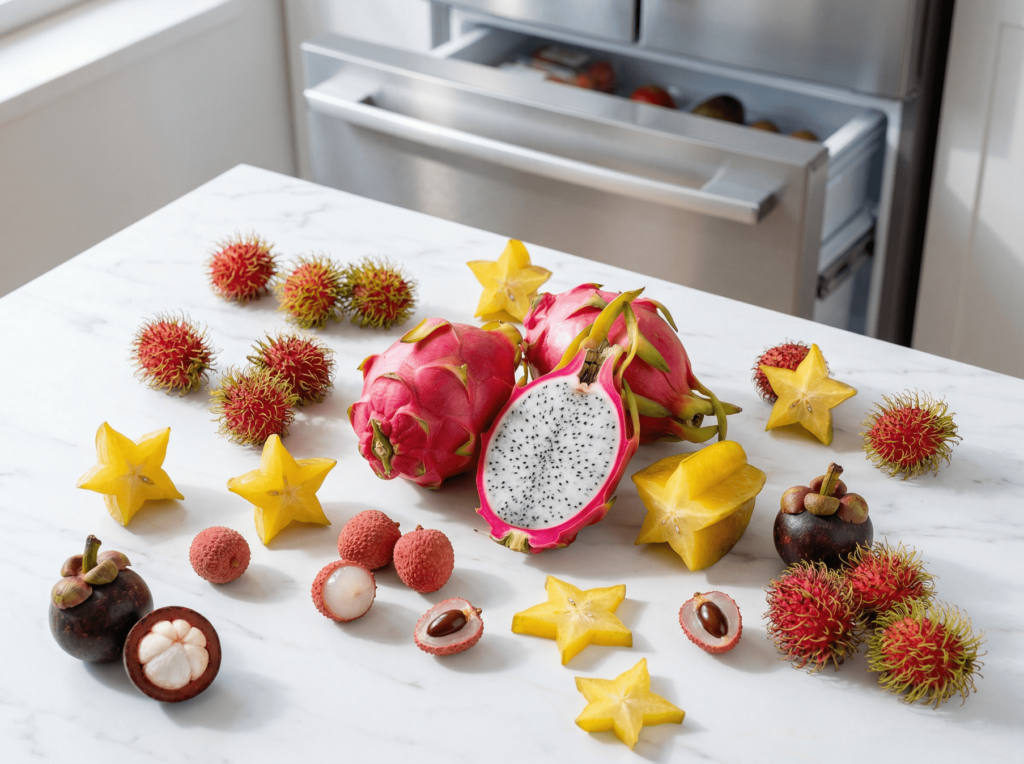
4. How to Store Cut Exotic Fruits and Prevent Browning
So you’ve cut into a gorgeous dragon fruit or papaya but can’t finish it in one sitting. Knowing how to keep exotic fruits fresh longer once cut is just as important as whole-fruit storage — especially since most exotic varieties are large and rarely finished in one go.
The browning problem — and the science behind it
Browning in cut fruit is caused by oxidation — when the enzymes in the flesh react with oxygen in the air. Acid (like lemon or lime juice) neutralises these enzymes, and reducing air contact by wrapping tightly or using an airtight container slows the process significantly.
Apply lemon or lime juice immediately
The citric acid acts as a natural antioxidant. A light squeeze over the exposed flesh of avocado, papaya, and star fruit works well. For dragon fruit and mangosteen, this is less necessary as they don’t brown as quickly.
Use an airtight glass container
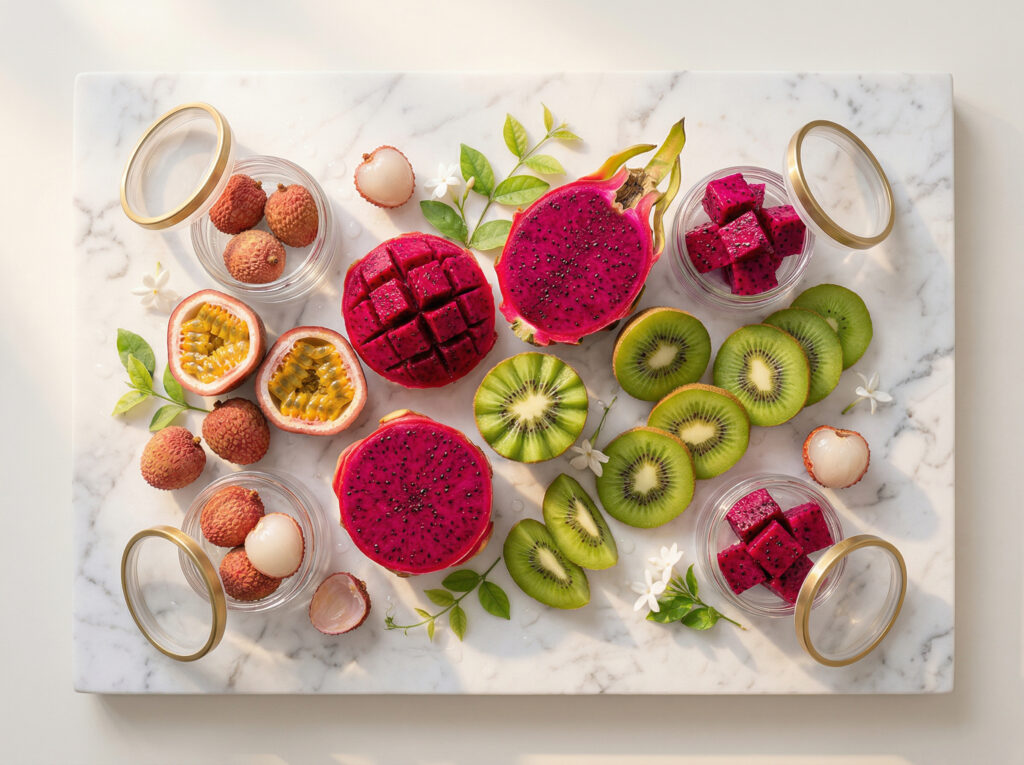
Glass is better than plastic for cut fruit — it doesn’t absorb odours or leach chemicals, and creates a better seal. If storing cut papaya or dragon fruit, cube it first and store in a single layer if possible.
Press cling wrap directly onto the flesh
For half-fruits like avocado or papaya, wrapping tightly with cling film pressed onto the cut surface (not just over the bowl) minimises air exposure dramatically. This is the single most effective technique for halved fruits.
Refrigerate within 30 minutes of cutting
Every minute at room temperature accelerates enzyme activity and bacterial growth on cut fruit. In India’s climate, don’t leave cut exotic fruit on the counter for more than 30 minutes. This is especially critical for lychee, mangosteen, and rambutan once shelled.
Freeze what you won’t use in 2–3 days
Dragon fruit cubes, mango chunks, passion fruit pulp, and papaya pieces all freeze superbly for smoothies and desserts. Lay pieces flat on a baking tray, freeze for 2 hours, then transfer to a sealed bag. This “flash freeze” method prevents them from clumping together.
Don’t do this: Washing exotic fruits before refrigerating them — especially lychee, rambutan, and berries — introduces excess moisture that dramatically accelerates mould. Always wash just before eating, never before storing.
What about mixed fruit platters?
If you’ve prepared a mixed exotic fruit platter and have leftovers, store different fruits in separate containers wherever possible. Mixing high-acid fruits (passion fruit, kiwi) with mild ones (dragon fruit, lychee) can cause off-flavours within hours. If separating isn’t practical, consume within 12 hours and keep tightly covered in the coldest part of your fridge.
Conclusion: A Little Knowledge Goes a Long Way
Learning how to store exotic fruits at home properly is genuinely one of the most valuable kitchen skills you can develop — especially when you’re investing in premium quality fruits. The core principles are simple: ripen at room temperature, refrigerate once ripe, never wash before storing, keep ethylene-sensitive fruits away from ethylene producers, and freeze what you won’t consume in a few days.
With these exotic fruit storage tips, you’ll find that your ProFruits order goes much further — less waste, more enjoyment, and the full flavour experience these extraordinary fruits are meant to deliver.
Next steps: Bookmark this guide for reference when your next delivery arrives. Not sure which exotic fruits are in season right now? Visit profruits.in to see what’s freshly available — and use these storage techniques to make every fruit last as long as possible.

Hi, I’m Tanish Hingorani, a Business student with a passion for food, flavour, and everything that makes eating an experience worth talking about. As a baker, I bring a hands-on understanding of ingredients, quality, and the art of turning something simple into something extraordinary — which is exactly what drives my love for exotic and premium fruits. Through my blogs on ProFruits, I share honest insights, practical guides, and fresh perspectives on how the right fruits can transform your health, your kitchen, and your gifting game. Whether I’m breaking down the best seasonal picks in Mumbai or exploring the world of imported exotics, my goal is to make every read genuinely useful and every order feel like the right one.