
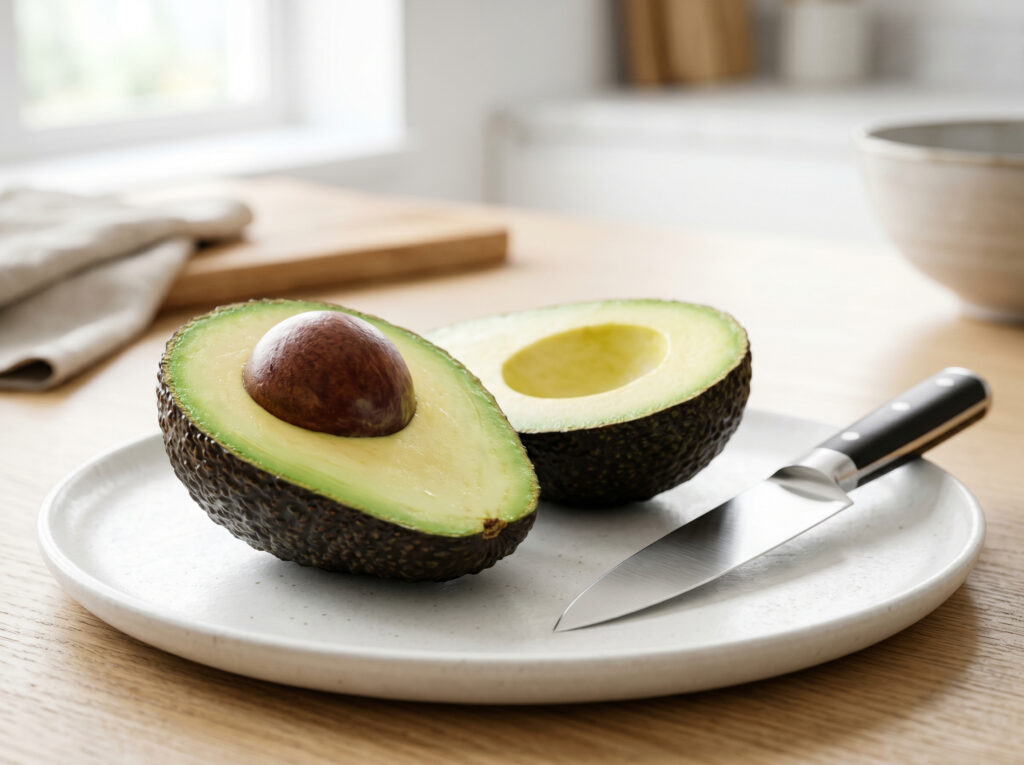
Avocado in India has gone from a fruit you saw on Instagram brunch posts from London and New York and quietly envied, to something you can now order fresh to your door in Mumbai.. Today it is in the menu at your neighbourhood café, on the shelf at your local premium grocery, and — increasingly — in the refrigerator of health-conscious Indian households from Bandra to Bengaluru. India’s avocado imports grew by 114% in a single year. That is not a trend. That is a shift.
But for all its rising popularity, avocado remains genuinely confusing for most Indian home cooks. How do you know when it is ripe? What happens if you eat it before it is ready? How do you use it in Indian cooking beyond guacamole and toast? And where can you actually get a good one in Mumbai?
This is the guide that answers all of it.
What Is Avocado — and Why Is India Discovering It Now?
Avocado (scientific name Persea americana) is a tropical fruit native to Central America. In India it is known by several names depending on the region — butter fruit in South India, makkhanfal in Hindi, and sometimes simply called “avo” in urban Indian shorthand. It is botanically a fruit but used almost entirely as a vegetable or fat substitute in cooking.
What makes avocado unusual among fruits is its fat content. Unlike most fruit which is high in sugar, avocado is high in monounsaturated fats — the same healthy fat found in olive oil. This gives it a buttery, creamy texture and a mild, rich flavour that takes on the character of whatever it is seasoned with.
India is discovering avocado now for a specific combination of reasons: the explosion of food content on social media, rising health consciousness among urban millennials, the growth of imported premium fruits in e-commerce, and a growing understanding that avocado’s creaminess actually complements Indian spices remarkably well.
Hass vs Indian (Butter Fruit): The Indian variety grown in Karnataka, Tamil Nadu, and Kerala is milder, less fatty, and sometimes watery in texture. The Hass avocado — imported from New Zealand, Kenya, and Chile — has significantly higher oil content (around 18%), a richer flavour, and the signature dark, pebbly skin. For all cooking purposes, Hass is the superior choice.
Avocado Nutrition: Why Indian Dietitians Are Paying Attention
Avocado’s nutritional profile addresses several specific gaps common in Indian diets. Here is what you get per 100g of Hass avocado:
| Nutrient | Amount (per 100g) | Why It Matters |
|---|---|---|
| Calories | 160 kcal | Satisfying, energy-dense snack |
| Monounsaturated Fat | ~10 g | Heart health, lowers LDL cholesterol |
| Dietary Fibre | 6.7 g | Gut health, blood sugar management |
| Potassium | 485 mg | More than a banana — blood pressure regulation |
| Vitamin K | 26% DV | Bone health, blood clotting |
| Folate | 20% DV | Critical for pregnancy, cell function |
| Vitamin C | 17% DV | Immunity, collagen production |
| Vitamin E | High | Skin health, antioxidant protection |
| Lutein & Carotenoids | Rich source | Eye health, reduces macular degeneration risk |
Source: USDA FoodData Central · ProFruits Hass Avocado (New Zealand)
One of avocado’s most underappreciated properties is that its healthy fats actually improve the absorption of fat-soluble vitamins (A, D, E, K) from other foods you eat with it. Eating avocado alongside a salad or dal does not just add nutrients — it makes the nutrients in those other foods more bioavailable.
How to Check If an Avocado Is Ripe — The Complete Guide
This is the most common frustration with avocado in India. Most people either buy one that is rock hard and inedible, or cut into one that has already gone brown and soft inside. Here is exactly how to get it right every single time.
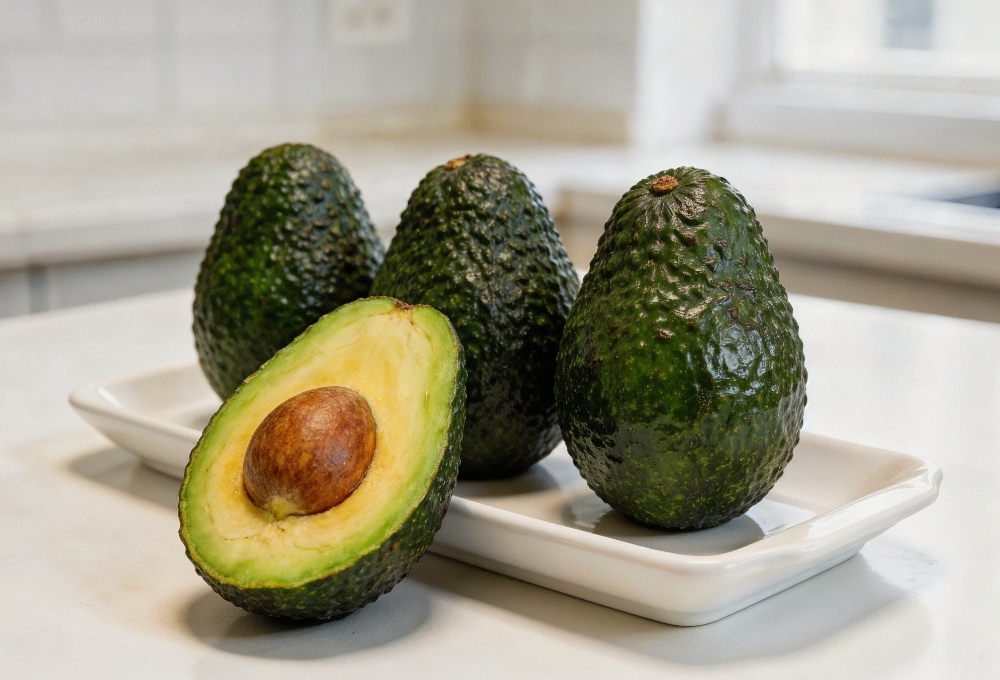
Underripe
Not ReadyBright green skin, rock hard to touch, no give when pressed. Needs 2–4 days at room temperature.
Perfectly Ripe
Ready to EatDark green to black skin. Yields gently to light pressure. Sweet fragrance near stem. Eat today or refrigerate for 2–3 days.
Overripe
Past BestVery dark or black skin. Mushy to touch, large soft patches. May smell slightly fermented. Avoid.
The 4-Step Ripeness Check
Colour: Hass avocados turn from bright green to dark green and almost black as they ripen. A completely green Hass is not ready. If still vivid green, give it 2–3 more days.
The gentle squeeze: Cup the avocado in your palm and press very gently. A ripe avocado yields slightly — like pressing a ripe peach. Rock solid means underripe. Sinking dramatically means overripe.
The stem trick: Remove the small brown stub at the top. If the flesh underneath is bright green — it is perfectly ripe. If it is brown — the avocado has overripened inside regardless of how firm it feels outside. If the stub will not come away easily — it is underripe.
The smell: A ripe avocado near the stem end has a faint, sweet, slightly nutty fragrance. No smell means underripe. A slightly alcoholic or fermented smell means overripe.
ProFruits tip: If your avocado arrives firm (which it often will from cold-chain delivery), simply leave it on the counter at room temperature for 1–2 days. Place it in a paper bag with a banana to speed up ripening — the ethylene gas bananas release accelerates the process naturally.
What Happens If You Eat an Unripe Avocado?
This is a question most avocado guides skip entirely — but it is genuinely important because many Indians cut open an avocado that is still hard and eat it anyway, not realising there are real consequences.
⚠️ What Eating an Unripe Avocado Can Cause
- Digestive discomfort: Unripe avocados contain persin — a natural fungicidal toxin that becomes harmless as the fruit ripens. In an unripe avocado, persin levels are high enough to cause stomach cramps, nausea, and diarrhoea in sensitive individuals.
- Bitter, harsh taste: The flesh of an unripe avocado is firm, tasteless, and often noticeably bitter — a stark contrast to the creamy, nutty flavour of a ripe one. It will not taste like avocado at all.
- Difficult to digest: The fats in an unripe avocado are not fully developed and are significantly harder for the body to break down, potentially causing bloating and digestive discomfort even in people who normally tolerate avocado well.
- Nutrient loss: The full nutritional benefits of avocado — particularly the development of beneficial fatty acids and antioxidants — only complete as the fruit ripens. An unripe avocado provides a fraction of the nutritional value of a ripe one.
- Not suitable for babies or children: Avocado is often recommended as a first food for infants — but only when fully ripe. Unripe avocado should never be given to young children due to the higher persin content and indigestibility.
The bottom line: Never eat an avocado that is still rock hard. If you have cut into one that is not ready, wrap the cut halves tightly in cling film (press it directly onto the flesh to minimise air contact) and leave at room temperature for another 24–48 hours. The lemon juice trick — rubbing the cut surface with lemon — prevents browning and oxidation during this waiting period.
What about slightly brown flesh inside? Small brown spots inside a ripe avocado are usually fine — just scoop them out. Extensive browning throughout the flesh, however, means the avocado has oxidised internally and is past its prime. The flesh will taste bitter and should not be eaten.
How to Store Avocado Correctly
Whole unripe avocado
Leave on the kitchen counter at room temperature, away from direct sunlight. Check daily using the squeeze test. Do not refrigerate — cold temperatures halt the ripening process completely.
Whole ripe avocado
Move to the refrigerator immediately once ripe. This slows further ripening and keeps it in the perfect eating window for 2–3 days.
Cut avocado (unused half)
Keep the stone in the unused half — this slows oxidation around the seed. Rub the cut surface with lemon or lime juice, press cling film directly onto the flesh (not just over the top), and refrigerate. Consume within 24 hours for best quality.
Mashed/prepared avocado
Add lemon juice generously, press cling film directly onto the surface, and refrigerate. Use within 24 hours. Avocado browns when exposed to air — lemon juice (Vitamin C) inhibits the oxidation enzyme responsible.
Buying Avocado in India — What You Need to Know
Avocado is now widely available across India’s metro cities, but quality varies enormously depending on where and how you buy it.
Cheapest option but most inconsistent. Fruit is often purchased green and hard at wholesale, meaning you have no idea of its ripening timeline or cold-chain history.
More consistent quality but often overpriced for what you get. Check the stem trick before buying. Most supermarket avocados are sold underripe and need 2–3 days at home.
Convenient but highly variable. Quality depends entirely on the supply chain of individual dark stores. Ripeness on arrival is unpredictable.
Best for consistent quality and variety. ProFruits sources New Zealand Hass avocados through cold-chain imports, hand-selected and delivered fresh to your door across Mumbai.
Avocado price in Mumbai (2026)
Fresh avocado in Mumbai currently ranges from approximately ₹180–280/kg at wholesale markets, ₹350–500/kg on quick commerce platforms, and ₹380–600/kg for premium imported Hass at quality retailers. ProFruits offers premium New Zealand Hass avocados starting at ₹849 for 1 kg — hand-selected, cold-chain maintained, and delivered fresh.
The price difference between a generic local market avocado and a premium Hass is significant — but so is the difference in quality, creaminess, and eating experience. If you are trying avocado for the first time or cooking with it seriously, a good Hass is worth the premium.
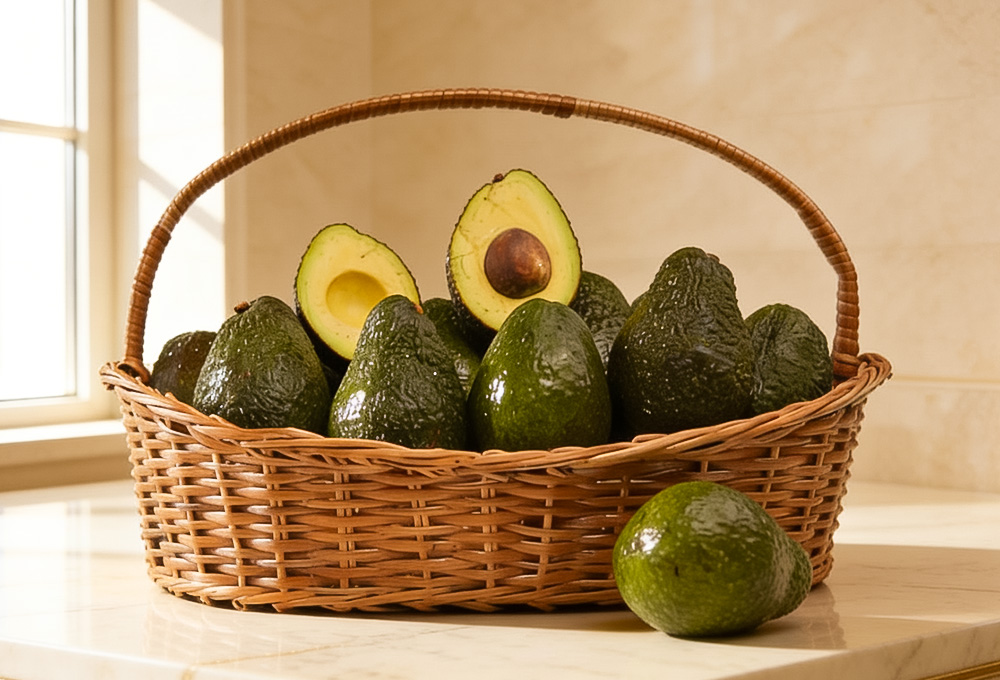
Premium Hass Avocado
Grown in New Zealand’s fertile orchards. Creamy, buttery texture with a rich nutty flavour. Hand-selected for ripeness, freshness, and quality. Perfect for Indian cooking applications.
Starting at ₹849 / 1 kg · Next-day delivery across Mumbai
Buy Fresh Avocado →Health Benefits of Avocado — Why It Belongs in Every Indian Diet
Indian diets, while generally rich in vegetables and pulses, often lack sufficient healthy fat sources and are frequently low in potassium and certain fat-soluble vitamins. Avocado addresses each of these gaps directly.
The monounsaturated oleic acid in avocado reduces LDL (bad) cholesterol and raises HDL (good) cholesterol. Particularly relevant given India’s high rates of cardiovascular disease.
6.7g of fibre per 100g — one of the highest fibre fruits. Supports a healthy microbiome, reduces constipation, and helps regulate blood sugar after meals.
Rich in Vitamin K, which plays a critical role in calcium absorption and bone mineralisation. Relevant particularly for Indian women over 35 who are at elevated osteoporosis risk.
The combination of healthy fat and fibre creates lasting satiety. Studies show people who eat avocado regularly consume fewer calories overall because they stay full longer between meals.
Rich in lutein and zeaxanthin — carotenoids that accumulate in the retina and protect against age-related macular degeneration and cataracts.
Vitamin E and the monounsaturated fats in avocado support skin elasticity, reduce inflammation, and nourish hair follicles. This is why avocado is also widely used in skincare formulations.
FAQs About Avocado in India
Is avocado grown in India?
Yes — avocado is grown in parts of Karnataka, Tamil Nadu, Kerala, and Sikkim. The Indian variety is commonly called “butter fruit” and has a milder flavour and lower fat content than imported Hass avocados. For cooking and full nutritional value, imported Hass from New Zealand or Kenya is significantly superior.
How do I know if my avocado is ripe?
Press gently near the stem end — a ripe avocado yields slightly without being mushy. The skin of a Hass avocado turns dark green to almost black when ripe. Remove the small stem stub — green underneath means ripe, brown means overripe. A faint sweet fragrance near the stem is another sign of perfect ripeness.
What happens if you eat an unripe avocado?
Unripe avocados contain higher levels of persin, a natural compound that can cause stomach cramps, nausea, and digestive discomfort. The flesh will also taste bitter and hard, with none of the characteristic creaminess of a ripe avocado. Always wait until it is fully ripe before eating.
Can avocado be used in Indian cooking?
Absolutely. Avocado paratha, avocado green chutney, avocado chaat, and avocado lassi are all established Indian-fusion applications. The key rule: always add avocado raw after cooking, never heat it directly as this destroys its fats and creates a bitter taste.
Where can I buy fresh avocado in Mumbai?
ProFruits offers premium New Zealand Hass avocados with next-day delivery across Mumbai. Every avocado is hand-selected, cold-chain maintained, and packed to arrive at the perfect eating window. Order at ProFruits.in →
How do I ripen an avocado faster?
Place the unripe avocado in a brown paper bag with a banana or apple and leave at room temperature. The ethylene gas these fruits naturally produce accelerates ripening. Check daily — most firm avocados will be ready within 2–4 days using this method.
Is avocado good for weight loss in India?
Yes, despite being calorie-dense, avocado is excellent for weight management because its combination of healthy fat and fibre creates strong satiety. Research shows regular avocado eaters consume fewer total daily calories. It replaces less healthy fat sources like dalda and refined oils in cooking applications.

Hi, I’m Tanish Hingorani, a Business student with a passion for food, flavour, and everything that makes eating an experience worth talking about. As a baker, I bring a hands-on understanding of ingredients, quality, and the art of turning something simple into something extraordinary — which is exactly what drives my love for exotic and premium fruits. Through my blogs on ProFruits, I share honest insights, practical guides, and fresh perspectives on how the right fruits can transform your health, your kitchen, and your gifting game. Whether I’m breaking down the best seasonal picks in Mumbai or exploring the world of imported exotics, my goal is to make every read genuinely useful and every order feel like the right one.